
The passive voice is useful in IELTS because it shows grammatical range and helps you sound more natural when you want to:
✓ avoid saying who did something
✓ talk about rules, processes, or general facts
✓ sound more formal in Part 3
✓ vary your sentence structures
When Can We Use the Passive Voice?
1. General truths / widely-known facts
Great for Part 1 when talking about your city/ hometown/province/ country or yourself.

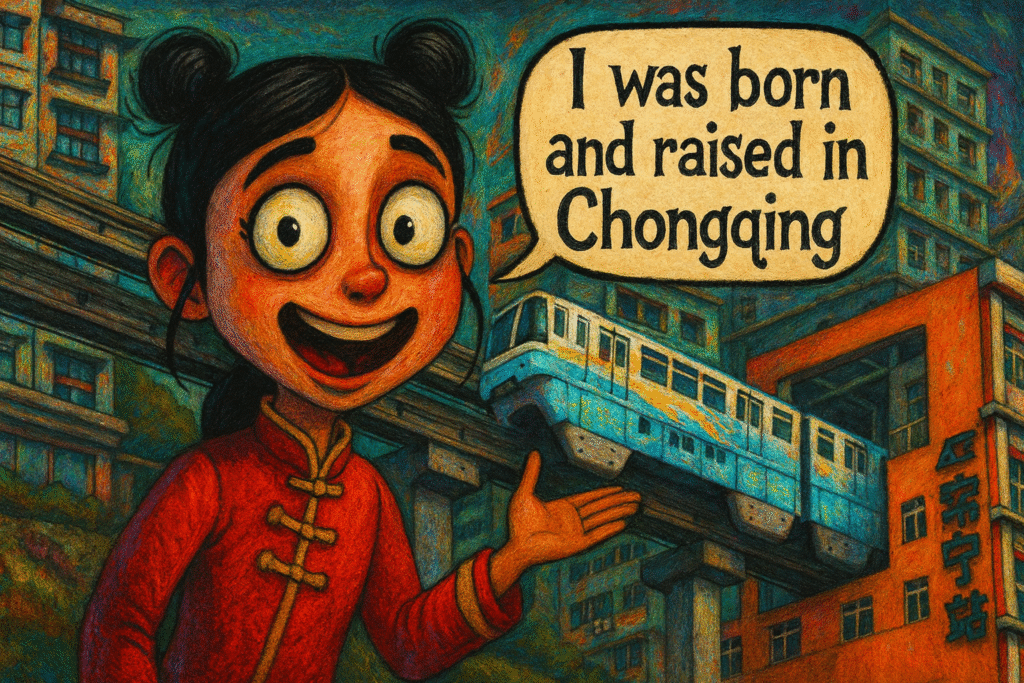
Exercise 1: Fill in the blanks using the passive voice
Use: is known for / is recognised for / is surrounded by / is divided into / was born and raised in
- My hometown __________________________ its beautiful beaches.
- Our country __________________________ producing high-quality rice.
- This province __________________________ three main regions.
- I __________________________ a small fishing village.
- My city __________________________ mountains and rivers.
Answers
1.My hometown __is known for/ is recognised for__ its beautiful beaches.
2. Our country __is known for/ is recognised for__ producing high-quality rice.
3. This province __is divided into__ three main regions.
4. I __was born and raised in__ a small fishing village.
5. My city __is known for/ is recognised for/ is surrounded by__ mountains and rivers.
Exercise 2. Rewrite the sentences using the passive voice.
- People know my city for its fresh seafood.→ My city __________________________ its fresh seafood.
- People recognise our region for its traditional crafts.→ Our region __________________________ its traditional crafts.
- My hometown has mountains all around it.→ My hometown __________________________ mountains.
Answers
1. People know my city for its fresh seafood. → My city __is known for__ its fresh seafood.
2. People recognise our region for its traditional crafts. → Our region __is recognised for__ its traditional crafts.
3. My hometown has mountains all around it. → My hometown __is surrounded by__ mountains.
2. More Formal Part 3 Answers
Very often in Part 3, we want to express: obligation/ necessity; possibilities/ suggestions/ ideas; and predictions/ speculation.
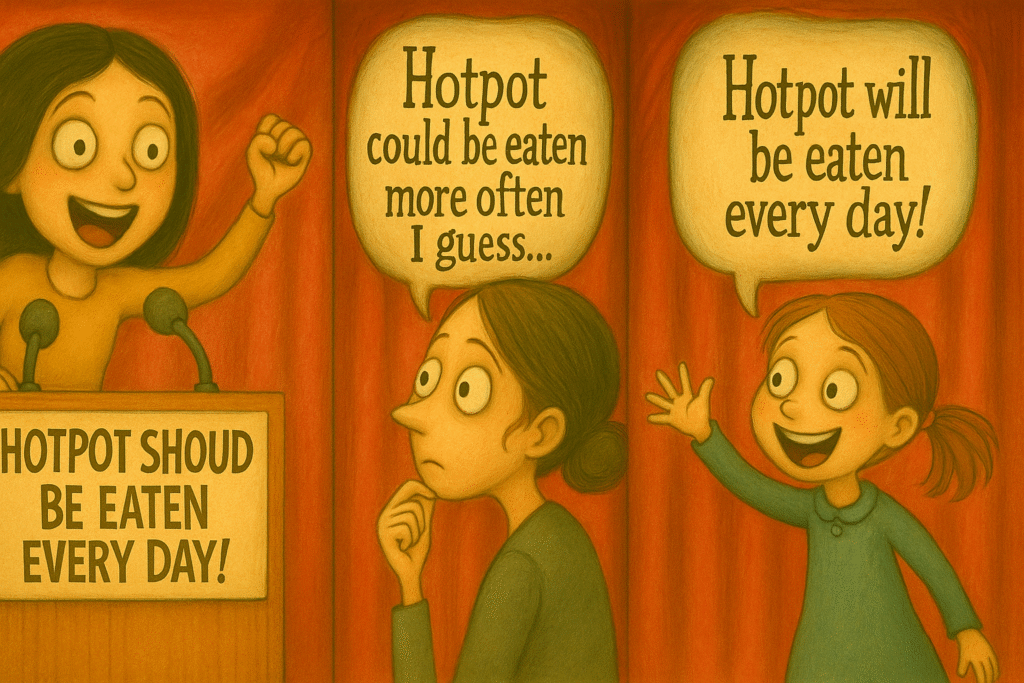
❗ 1. Obligation / Necessity
(should / must / need to / have to → passive forms)
- The government should create stricter laws.
→ Stricter laws should be created. - Schools must teach digital skills.
→ Digital skills must be taught in schools. - Public money needs to support the arts.
→ The arts need to be supported with public funding. - Companies have to follow environmental guidelines.
→ Environmental guidelines have to be followed.
Why it’s useful:
IELTS Part 3 often asks what should be done / what must be changed / who should be responsible.
💭 2. Possibility / Suggestions / Ideas
(can / could / might → passive forms)
- The government could build better transport infrastructure.
→ Better transport infrastructure could be built. - Parents can encourage children to read more.
→ Children can be encouraged to read more. - Designers might use eco-friendly materials.
→ Eco-friendly materials might be used. - Cities could introduce more cycling lanes.
→ More cycling lanes could be introduced.
Why it’s useful:
Part 3 often asks what could be done to improve society.
🔮 3. Prediction / Speculation
(will / is going to → passive)
- Companies will automate more processes.
→ More processes will be automated. - Governments will invest more in renewable energy.
→ More investment will be made in renewable energy. - Schools are going to include more online courses.
→ More online courses are going to be included in schools. - Technology will replace certain jobs.
→ Certain jobs will be replaced by technology.
Why it’s useful:
Prediction questions are extremely common in Part 3.
Exercise 3. Change the sentences to the passive voice.
- The government should protect traditional markets.→ ______________________________________________.
- Schools must provide healthy food for students.→ ______________________________________________.
- Cities need to reduce carbon emissions.→ ______________________________________________.
- Companies have to monitor workplace safety.→ ______________________________________________.
- Parents should guide children on safe Internet use.→ ______________________________________________.
Answers
1. The government should protect traditional markets.→ __Traditional markets should be protected (by the government)__.
2. Schools must provide healthy food for students. → __Healthy food must be provided for students (by schools)___.
3. Cities need to reduce carbon emissions.→ __Carbon emissions need to be reduced (by cities)__.
4. Companies have to monitor workplace safety. → __Workspace safety has to be monitored (by companies)__.
5. Parents should guide children on safe internet use. → __Children should be guided on safe internet use (by parents)__.
Exercise 4. IELTS-style speaking prompts
Students must answer using passive voice (should/must/need to + be + past participle).
- What should be done to make your hometown safer?
- What must be changed in schools to improve education?
- Who should be responsible for protecting the environment in your country?
Potential Answers
1.What needs to be done to make your hometown safer? -> Roads need to be repaired.
2. What must be changed in schools to improve education? -> School lunches must be improved.
3. Who should be responsible for protecting the environment in your country? -> Everyone should be held responsible.
Exercise 5. Rewrite using a passive form.
- The city could build more public parks.→ ______________________________________________.
- Countries could improve rural healthcare facilities.→ ______________________________________________.
- Designers can create more affordable electric cars.→ ______________________________________________.
- Communities might organise more cultural events.→ ______________________________________________.
- Restaurants could introduce healthier food options.→ ______________________________________________.
Answers
1. The city could build more public parks. → More public parks could be built (by the city).
2. Countries could improve rural healthcare facilities. → Rural healthcare facilities could be improved (by countries).
3. Designers can create more affordable electric cars. → More affordable cars can be created (by designers).
4. Communities can organise more cultural events. → More cultural events can be organised (by communities).
5. Restaurants could introduce healthier food options. → Healthier food options could be introduced (by restaurants).
Exercise 6. IELTS-style speaking prompts
Answer using: can or could be + past participle.
- What could be done to reduce pollution in big cities?
- What can be done to improve public transport?
- What can be done to help young people read more?
Answers
1.What could be done to reduce pollution in big cities? -> Using public transport more could be encouraged.
2. What can be done to improve public transport? -> New routes could be added.
3. What can be done to help young people read more? -> Book reading incentives could be introduced.
Exercise 7. Rewrite the sentences in passive voice.
- Scientists will develop new vaccines.→ ______________________________________________.
- Universities will open more international programmes.→ ______________________________________________.
- Online platforms are going to transform education.→ ______________________________________________.
- Technology will improve agricultural production.→ ______________________________________________.
- AI will replace many repetitive jobs.→ ______________________________________________.
Answers
1. Scientists will develop new vaccines. → New vaccines will be developed (by scientists).
2. Universities will open more international programmes. → More international programmes will be opened (by universities).
3. Online platforms are going to transform education. → Education are going to be transformed (by online platforms).
4. Technology will improve agricultural production. → Agricultural production will be improved (by technology).
5. AI will replace many repetitive jobs. → Many repetitive jobs will be replaced (by AI).
Exercise 8. IELTS-style speaking prompts
Use: will be + past participle / is going to be + past participle.
- How will technology change the workplace in the future?
- How will education be different in your country in 20 years?
- What will be improved in your city in the next decade?
Potential Answers
1. How will technology change the workplace in the future?-> The workplace will be changed dramatically in the future.
2. How will education be different in your country in 20 years?-> Education will be improved greatly in 20 years. Perhaps robotics will be focused on more.
3. What will be improved in your city in the next decade?-> I think the transport infrastructure will be the most improved aspect, but I hope the food scene will also be expanded.
3. Processes/ How Things Are Done
Passive voice is ideal when describing how something is made, prepared, organised, produced, handled, grown, designed, recycled, or used (Common in Part 3)
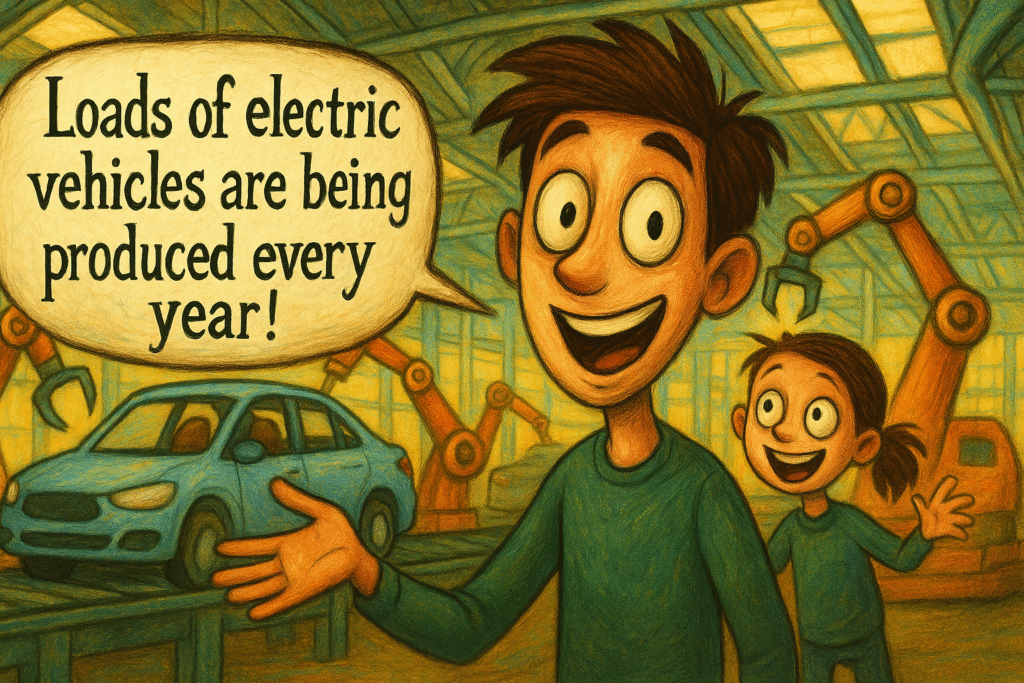
A) When Talking About Production / Manufacturing / Creation

B) When Talking About Food
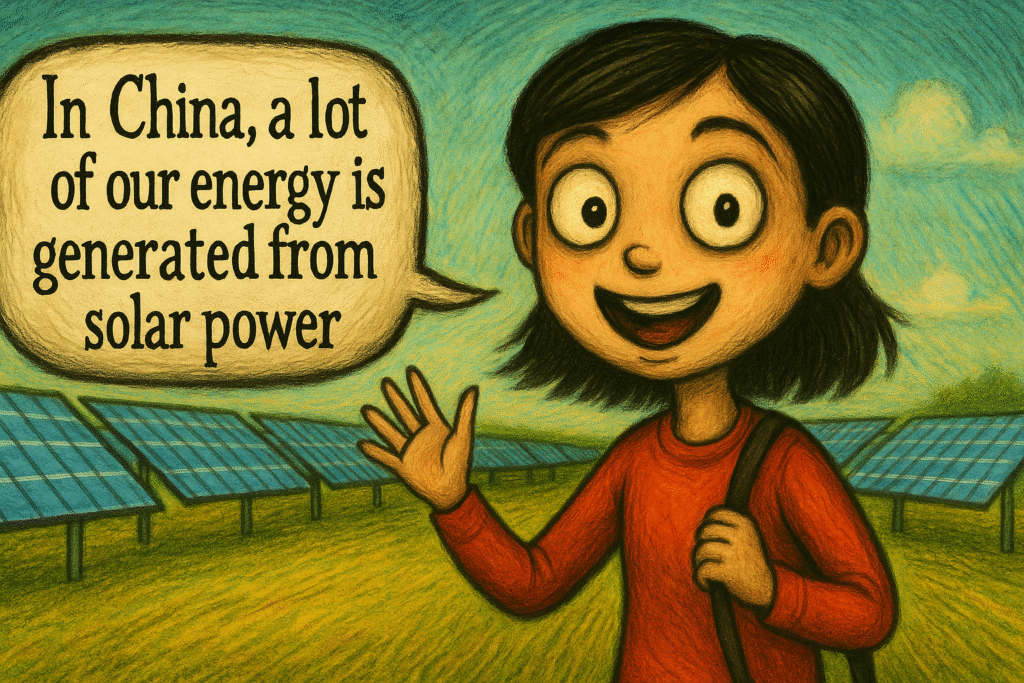
C) When Discussing Environmental Topics

D) When Explaining Social or Economic Change

E) When Describing Cultural Traditions or Festivals

F) When Explaining Systems or Procedures
Exercise 9. Put the verbs into passive form to describe the process.
- Rice (grow) __________________________ in large fields.
- The ingredients (mix) __________________________ before the dough is formed.
- Waste plastic (collect) __________________________ and then (sort) __________________________.
- Traditional masks (make) __________________________ by hand.
- The festival parade (organise) __________________________ months in advance.
Answers
1. Rice (grow) _is grown_ in large fields.
2. The ingredients (mix) _are mixed_ before the dough is formed.
3. Waste plastic (collect) _is collected_ and then (sort) _sorted_.
4. Traditional masks (make) _are made_ by hand.
5. The festival parade (organise) _is organised_ months in advance.
Exercise 10. Rewrite the sentences to describe the process using passive voice.
- Workers harvest the tea leaves by hand. → ______________________________________________.
- Factories produce solar panels in several stages. → ______________________________________________.
- Volunteers prepare the decorations for the festival. → ______________________________________________.
- Farmers grow organic vegetables without chemicals. → ______________________________________________.
- Technicians assemble the devices in a clean room. → ______________________________________________.
Answers
1. Workers harvest the tea leaves by hand. → Tea leaves are harvested by hand (by workers).
2. Factories produce solar panels in several stages. → Solar panels are produced in several stages (by factories).
3. Volunteers prepare the decorations for the festival. → The decorations for the festival are prepared (by volunteers).
4. Farmers grow organic vegetables without chemicals. → Organic vegetables are grown without chemicals (by farmers).
5. Technicians assemble the devices in a clean room. → The devices are assembled in a clean room (by technicians).
Exercise 11. Mini Speaking Task (Use at least 3 passive verbs):
Practice talking aloud about:
How a local food is made
How waste is recycled in your city
How a traditional festival is organised
How a product from your region is produced