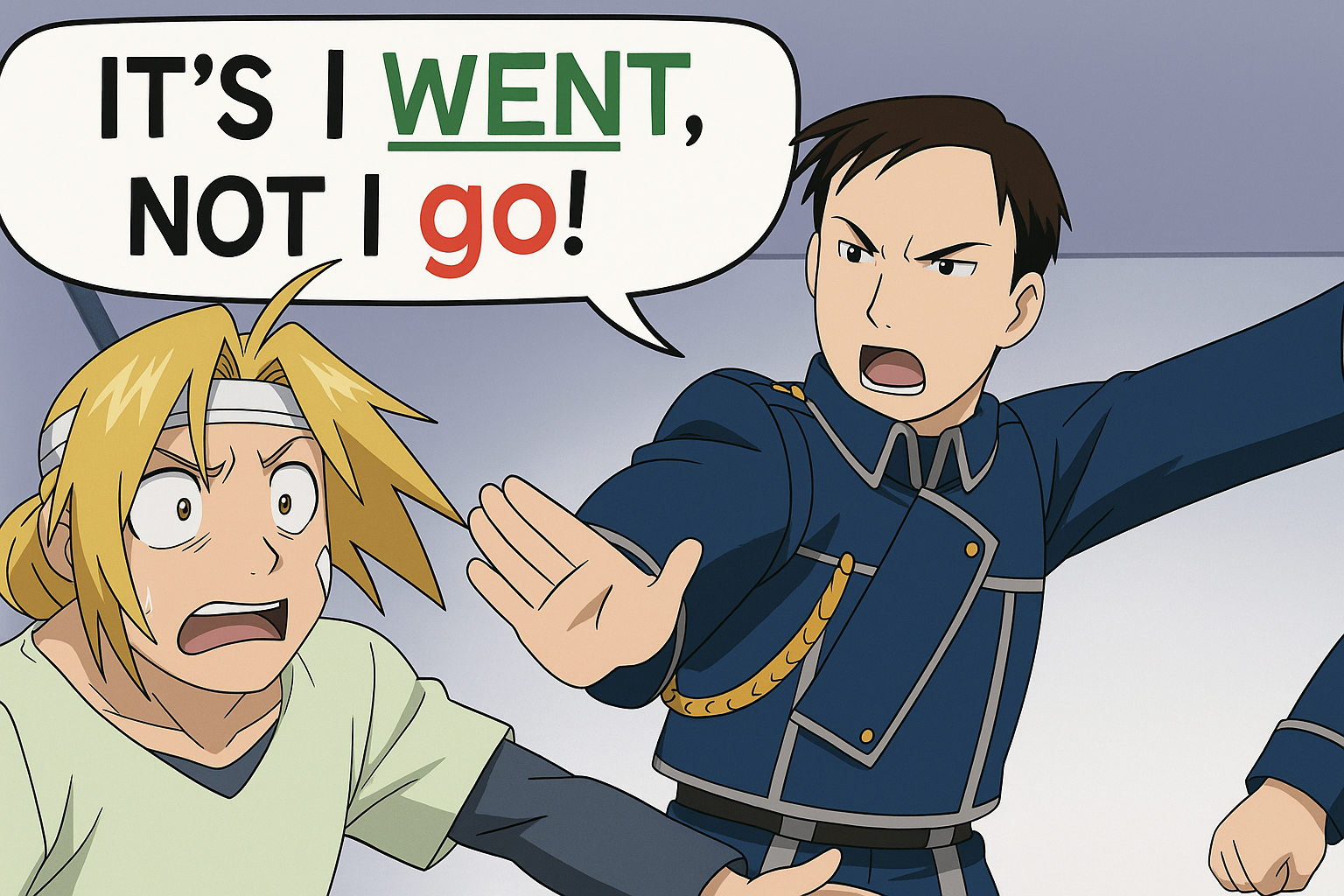
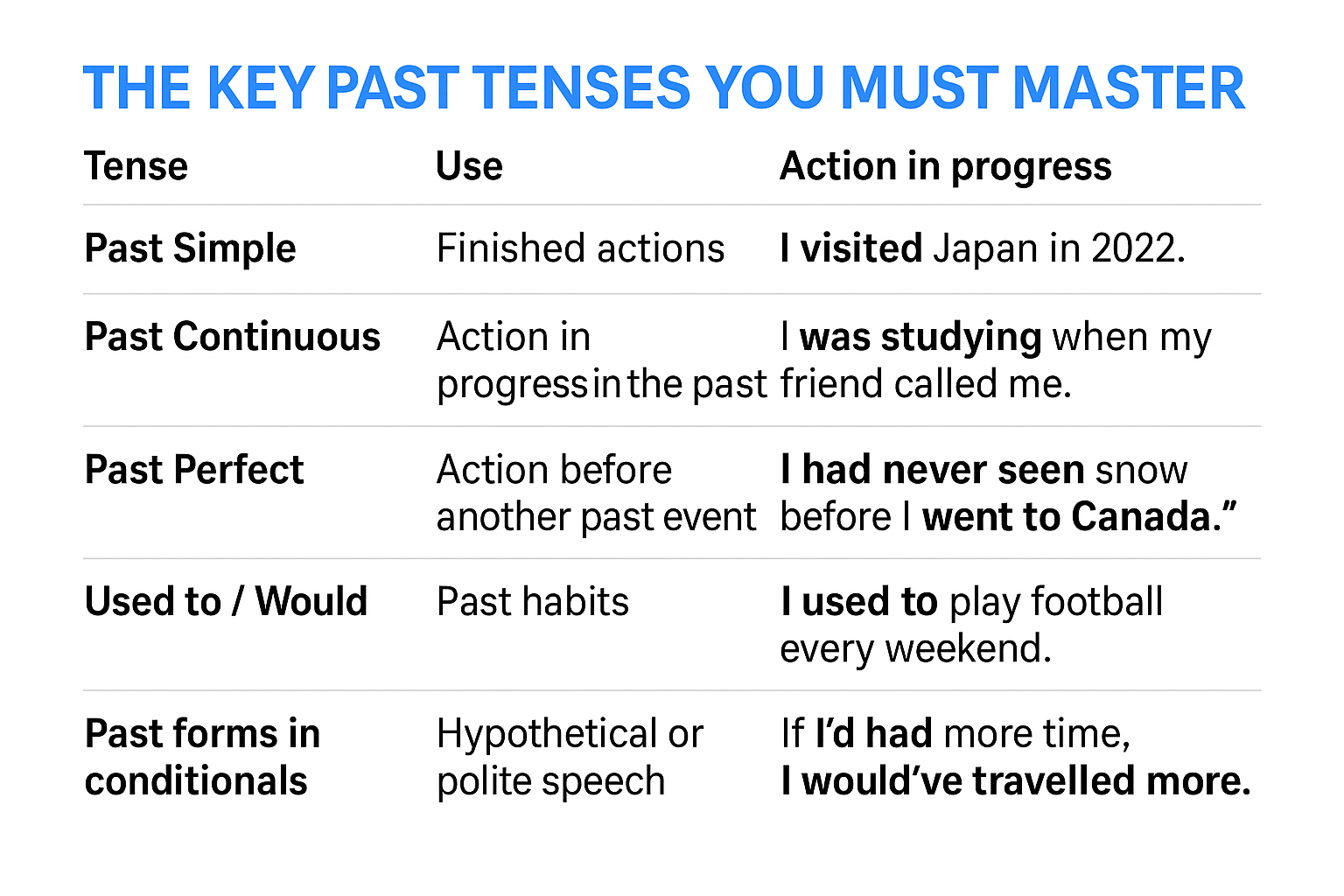
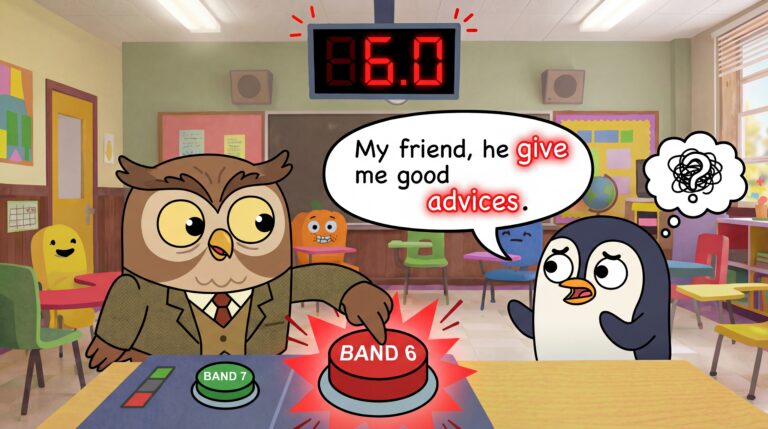
Use present tense for everything, even when describing the past. 👉 “I go to high school last year.”
Avoid complex tenses (e.g. past perfect).
Sound unclear or unnatural when telling stories.
Band 7 examiners expect:
Accurate tense use: switching naturally between past, present, and future.
Narrative control: describing past experiences fluently and in detail.
Grammatical range and accuracy: using a variety of tenses accurately.
🪄 Band 7 tip: Don’t just know the rules — use them naturally when telling stories or giving examples. Look below at some of the ways you might use past tenses in your IELTS Speaking:
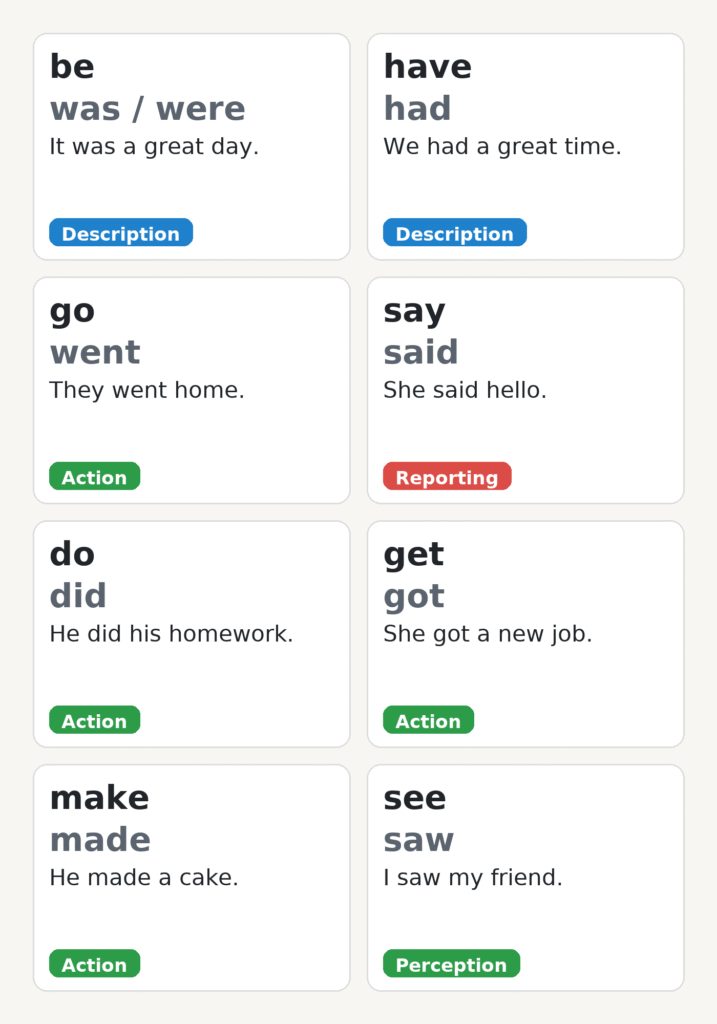
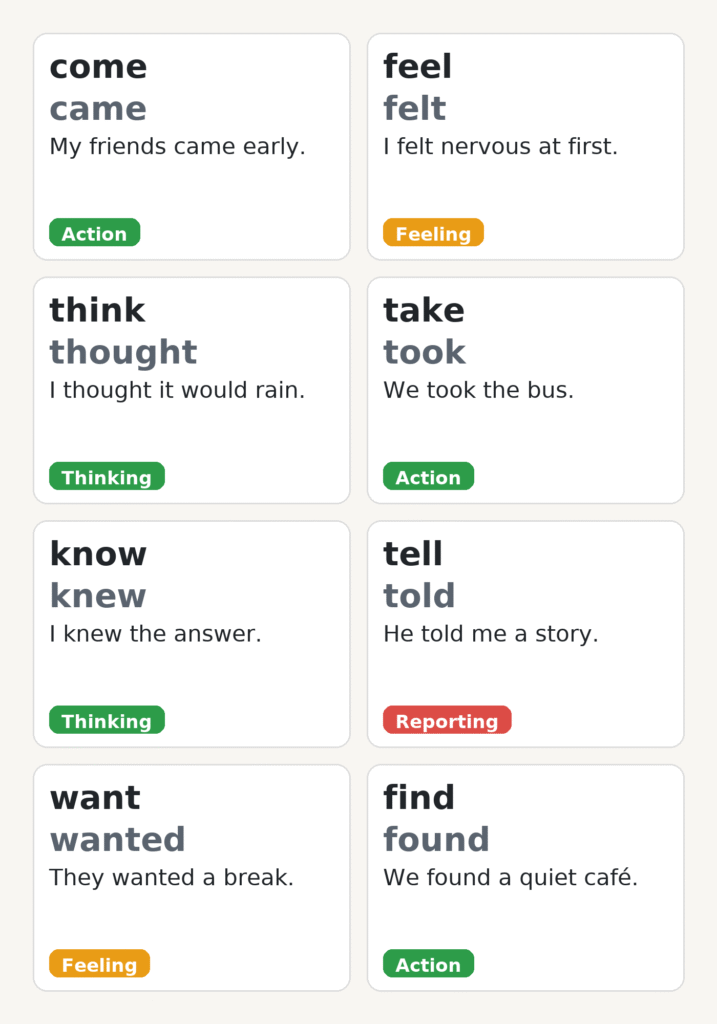
most Common Past Simple words
Read through these 24 verbs and then complete the practice exercises!
Warm-up – Quick Fire Practice 🗣️⚡
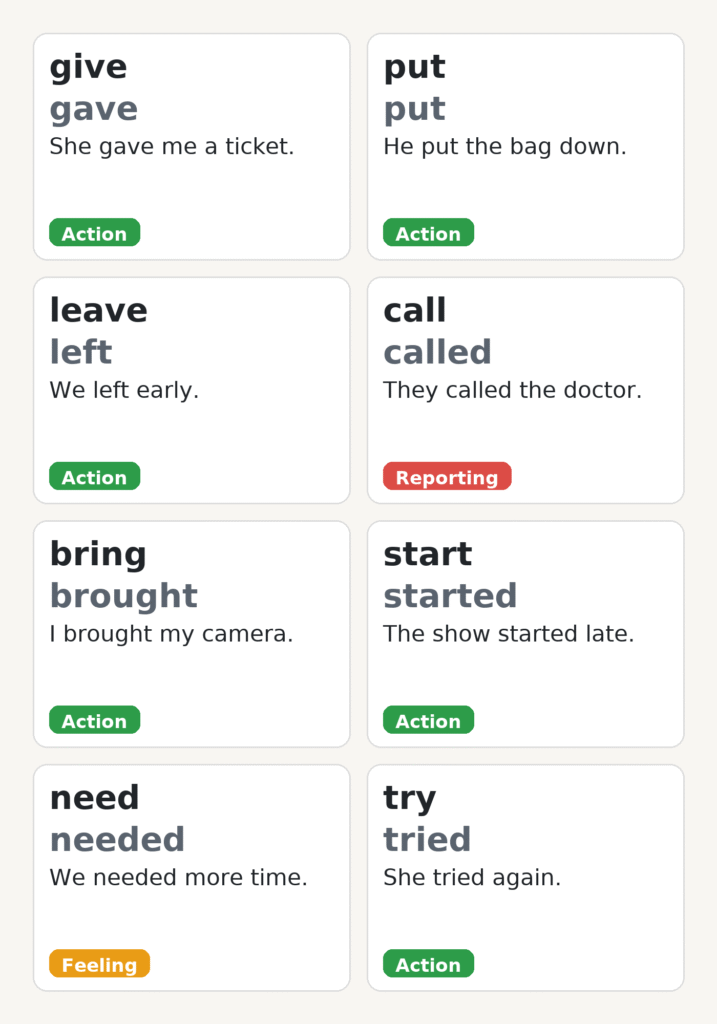
Open each of the tabs, and as quickly as you can, say the corresponding past tense verb aloud!
Word 1
want
Word 2
find
Word 3
leave
Word 4
be
Word 5
go
Word 6
take
Word 7
call
Word 8
come
Word 9
know
Word 10
see
Word 11
make
Word 12
bring
Word 13
put
Word 14
need
Word 15
say
Word 16
think
Word 17
do
Word 18
tell
Word 19
have
Word 20
start
Word 21
give
Word 22
get
Word 23
try
Word 24
Feel
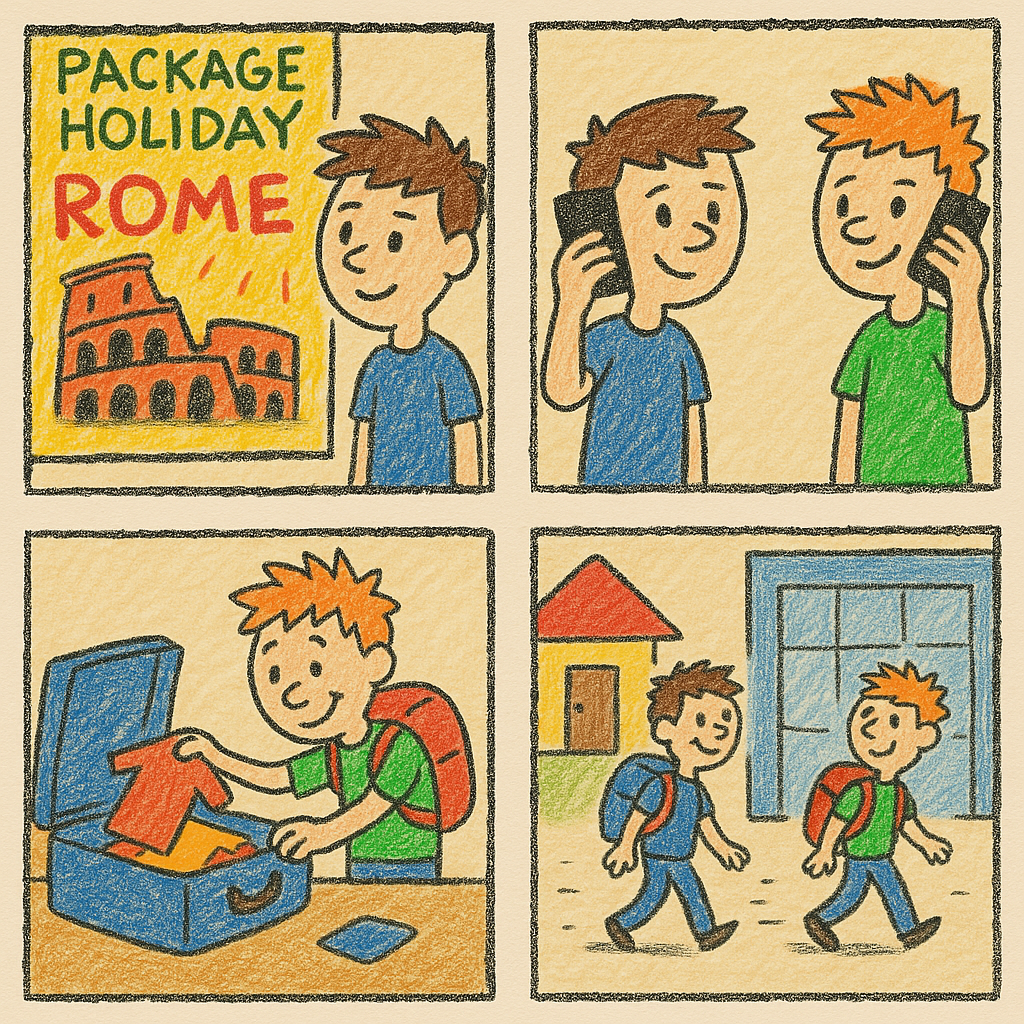
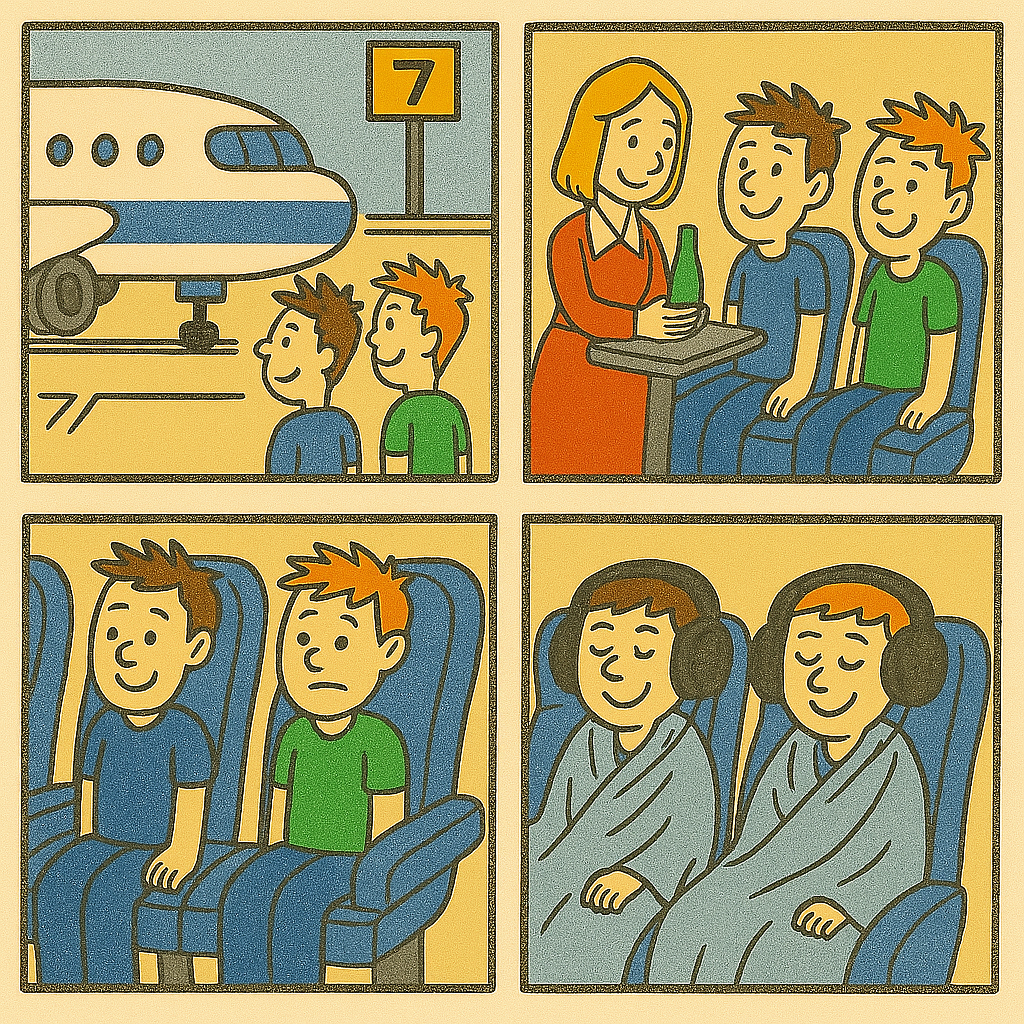
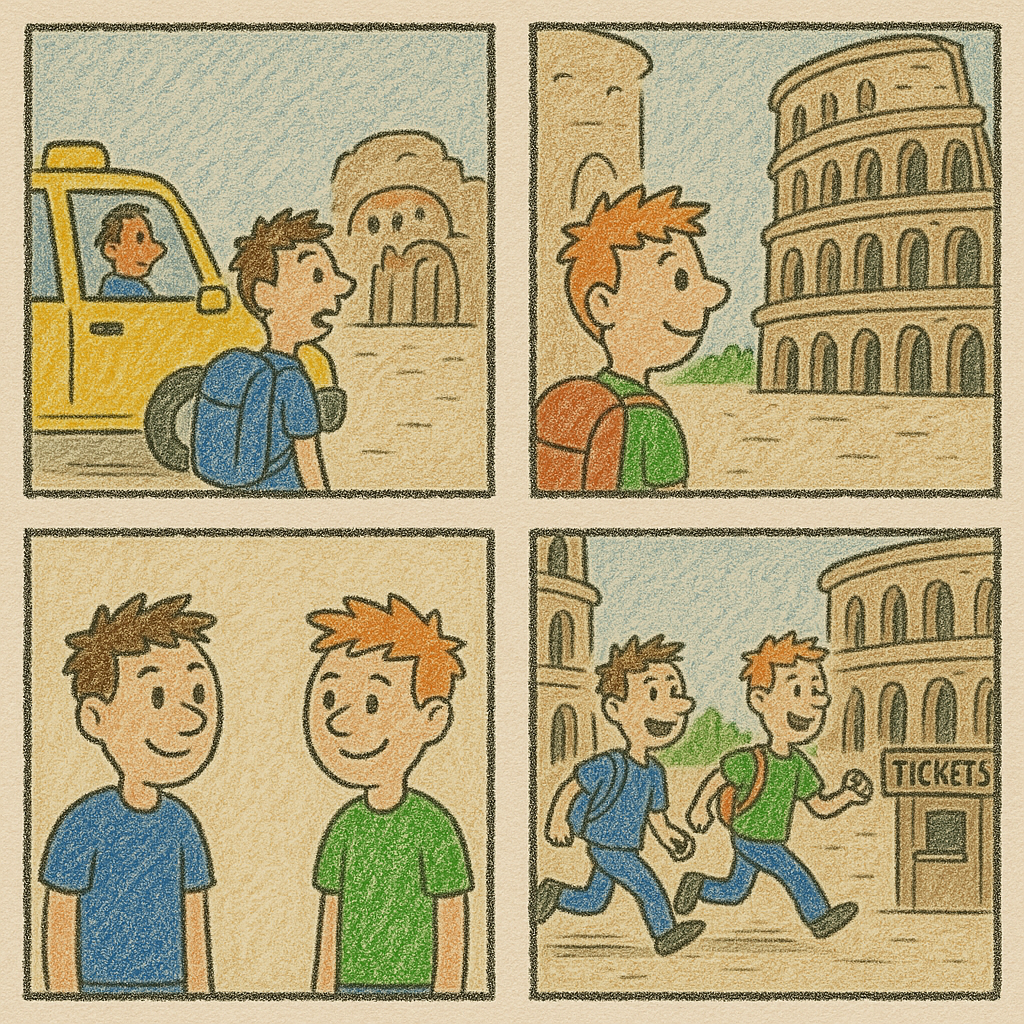
Exercise 1: Describe the Story!
Task: Look at the pictures and say what happened (using the past simple) aloud!
Use the following words to help guide your story:was, called, made, started, got, saw, found, said, wanted, gave, put, started, took, told, left, tried
For example, in picture 1, you might say “A boy saw a package holiday advert for Rome.”
Potential Answer
A boy saw a package holiday advert for Rome. He called his friend and told him about it. His friend also wanted to go. He started packing immediately after hanging up the call. They left their homes early in the morning and got to the airport. They checked in and found their gate. On the plane, the air hostess said that she was from Rome and gave them complimentary drinks! They tried to get some sleep on the plane but the baby in front made a lot of noise. They both put on their earphones and listened to music for the rest of the flight. When they landed, they started to feel excited. After getting through the customs, they took a taxi straight to the Colosseum. They got out of the taxi and stared at the Colosseum in awe! They looked at each other knowing that they made the right decision and ran to get tickets.
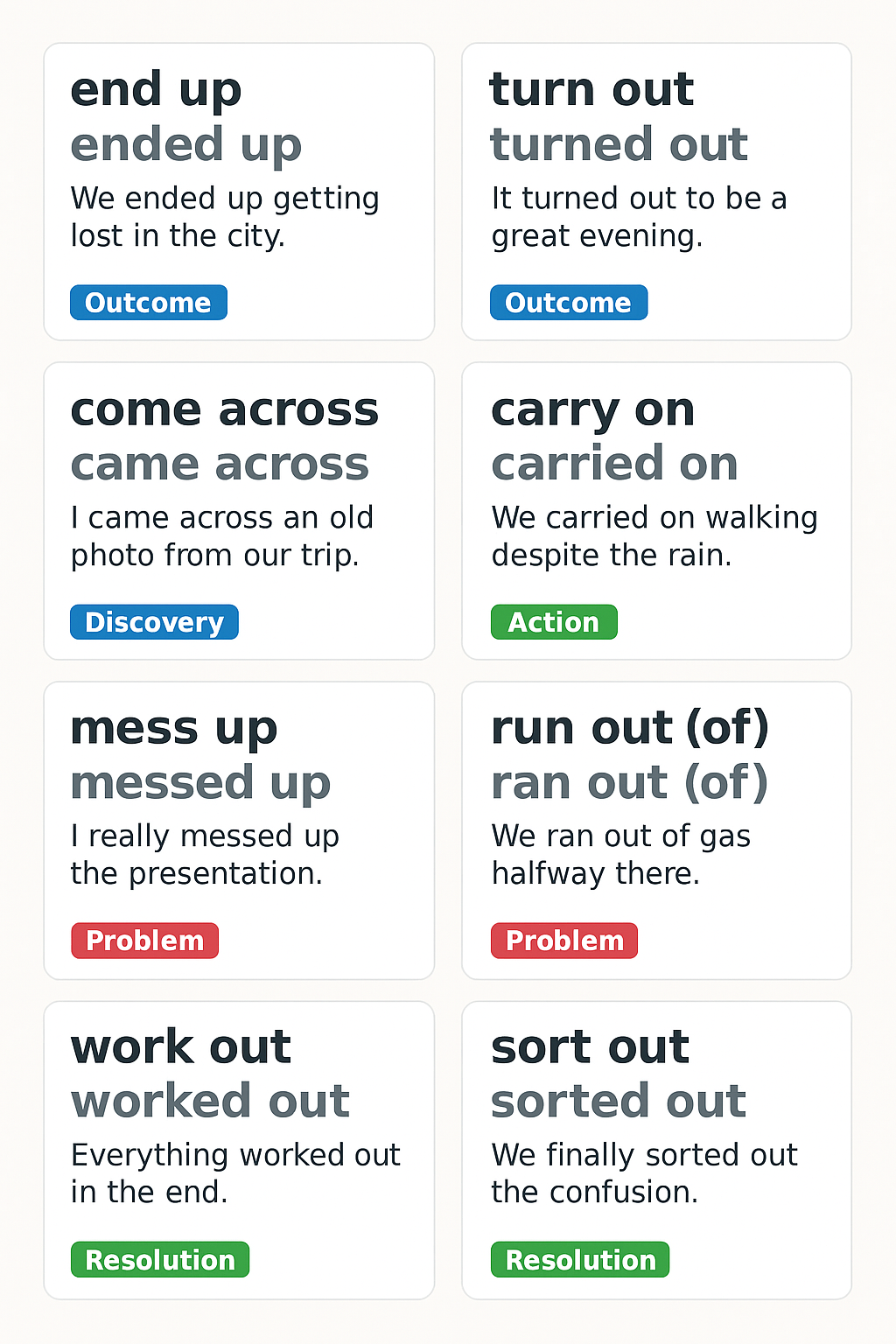
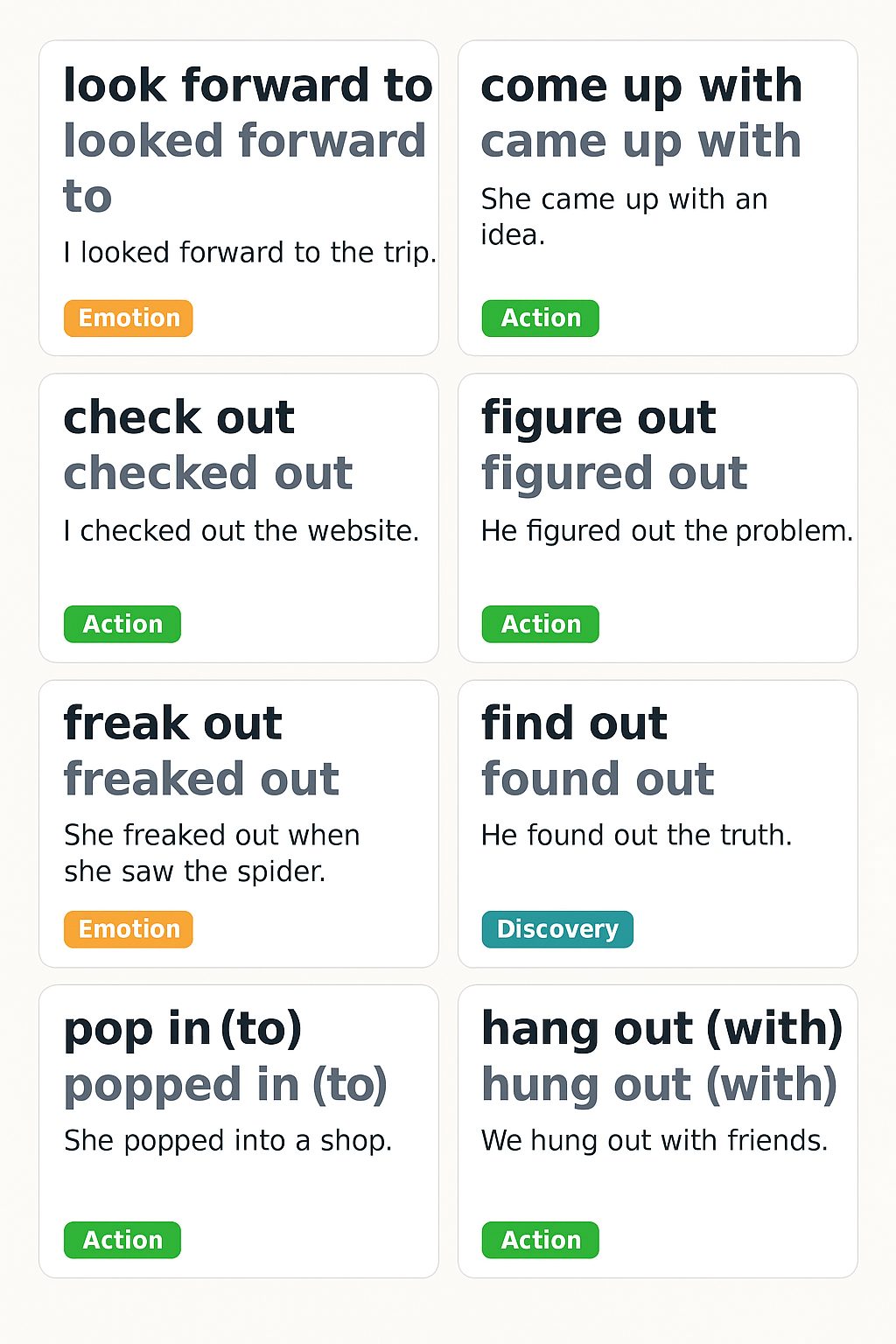
Most common Past Tense Phrasal Verbs
Read through these 16 phrasal verbs and then complete the practice exercise!
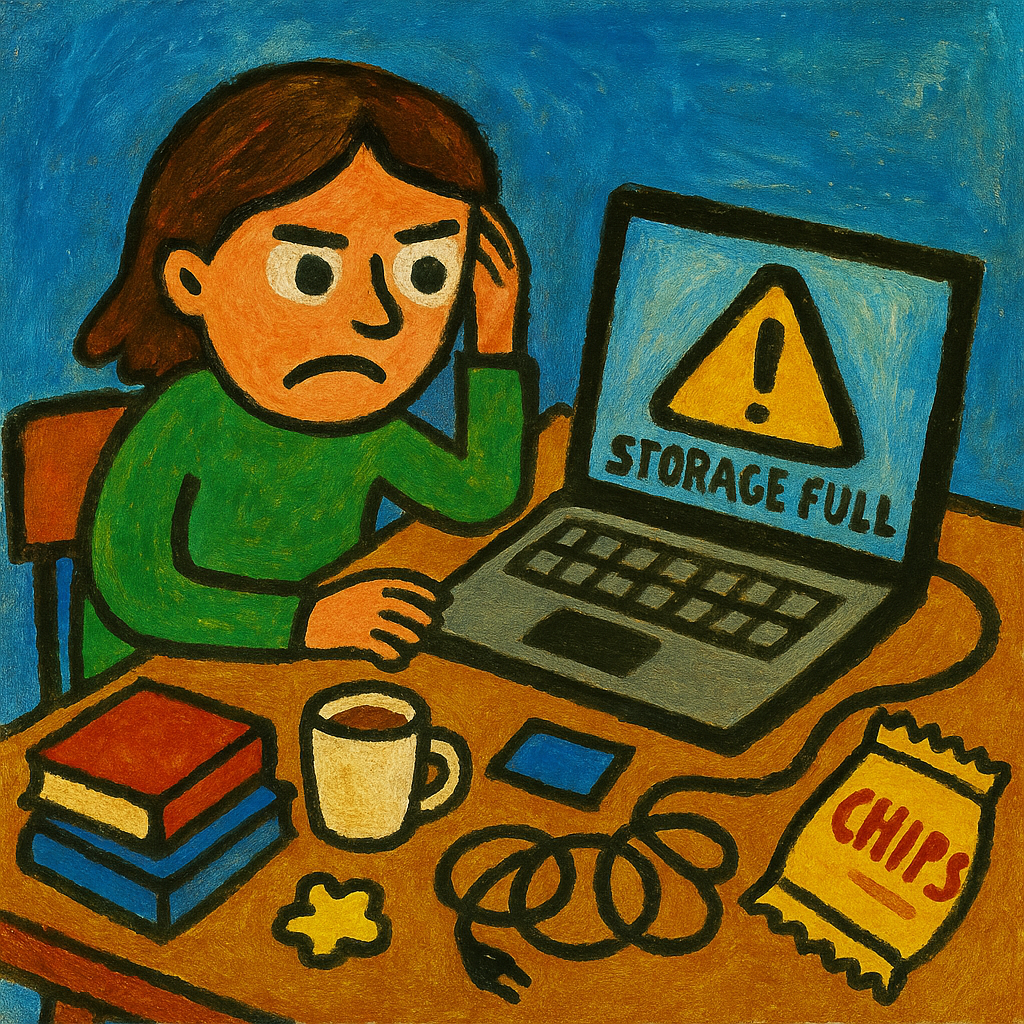
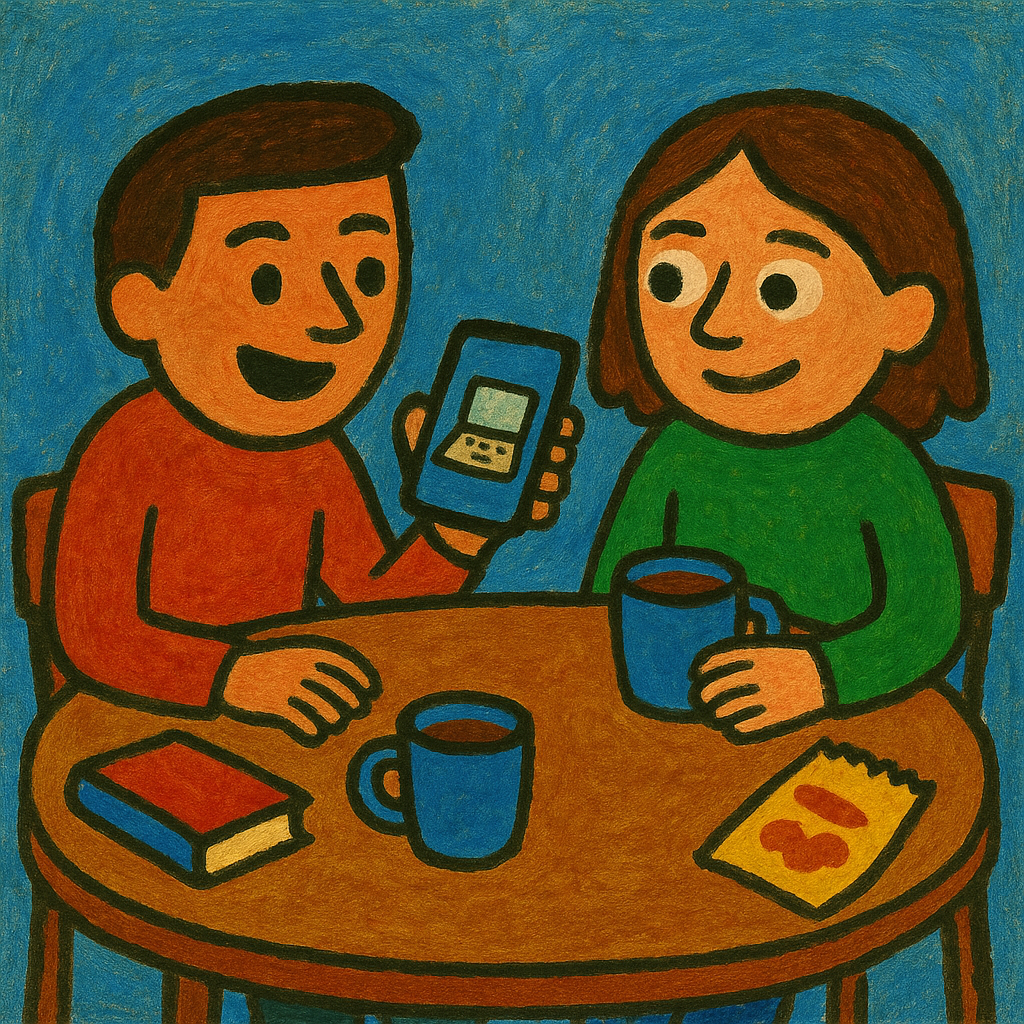
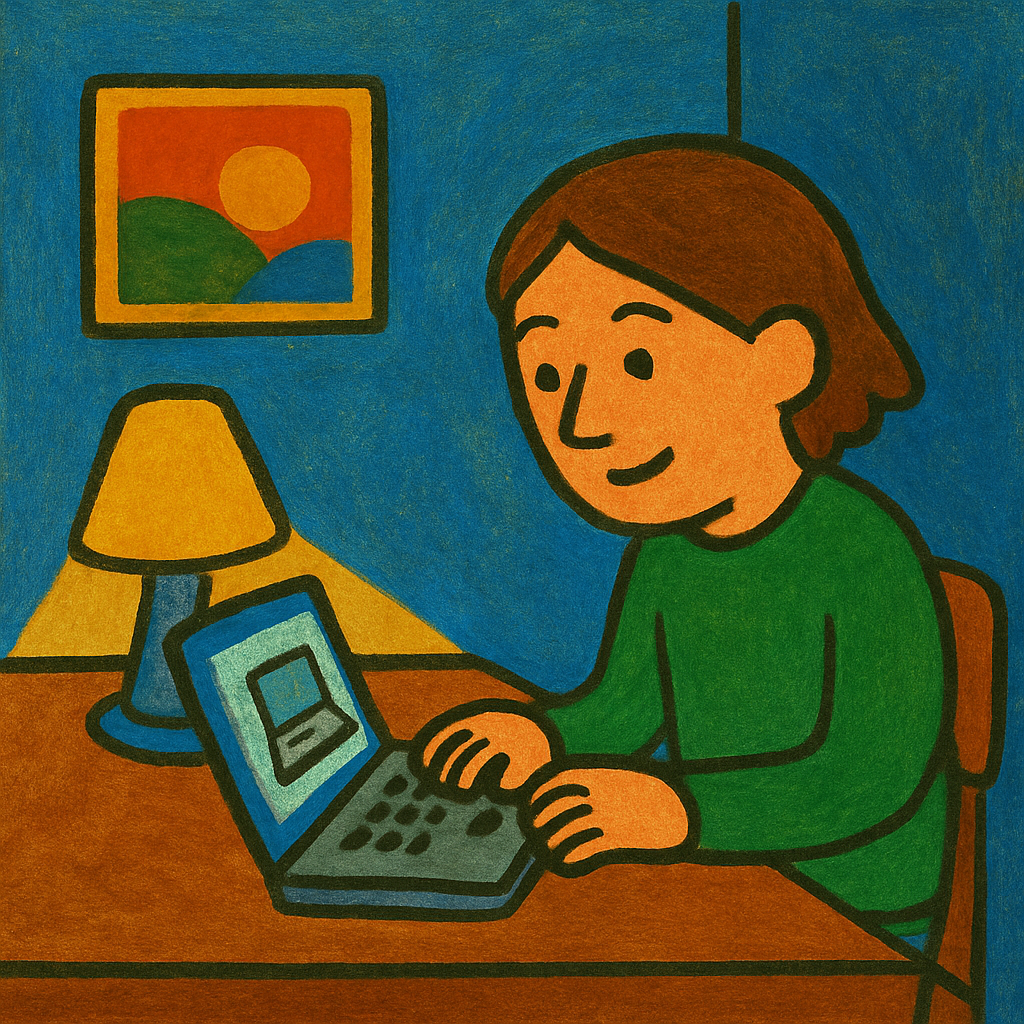
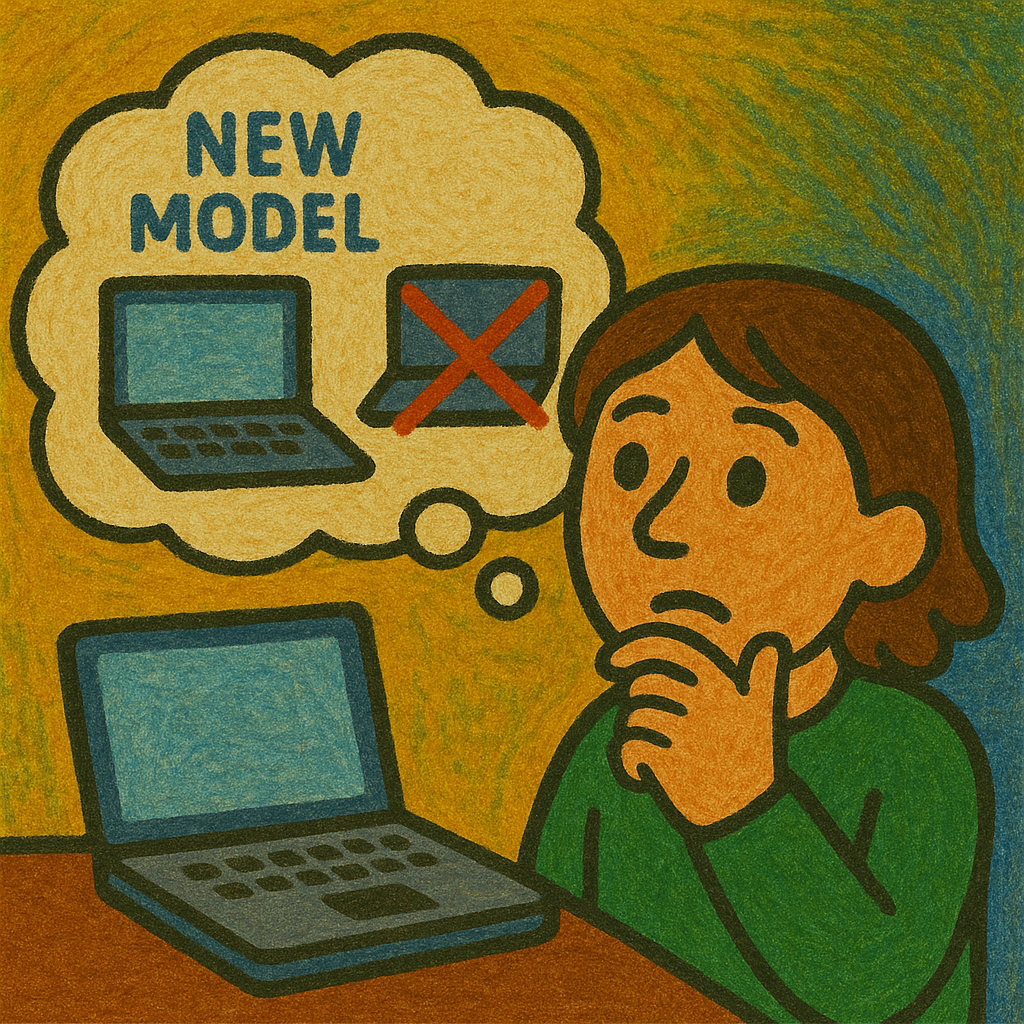
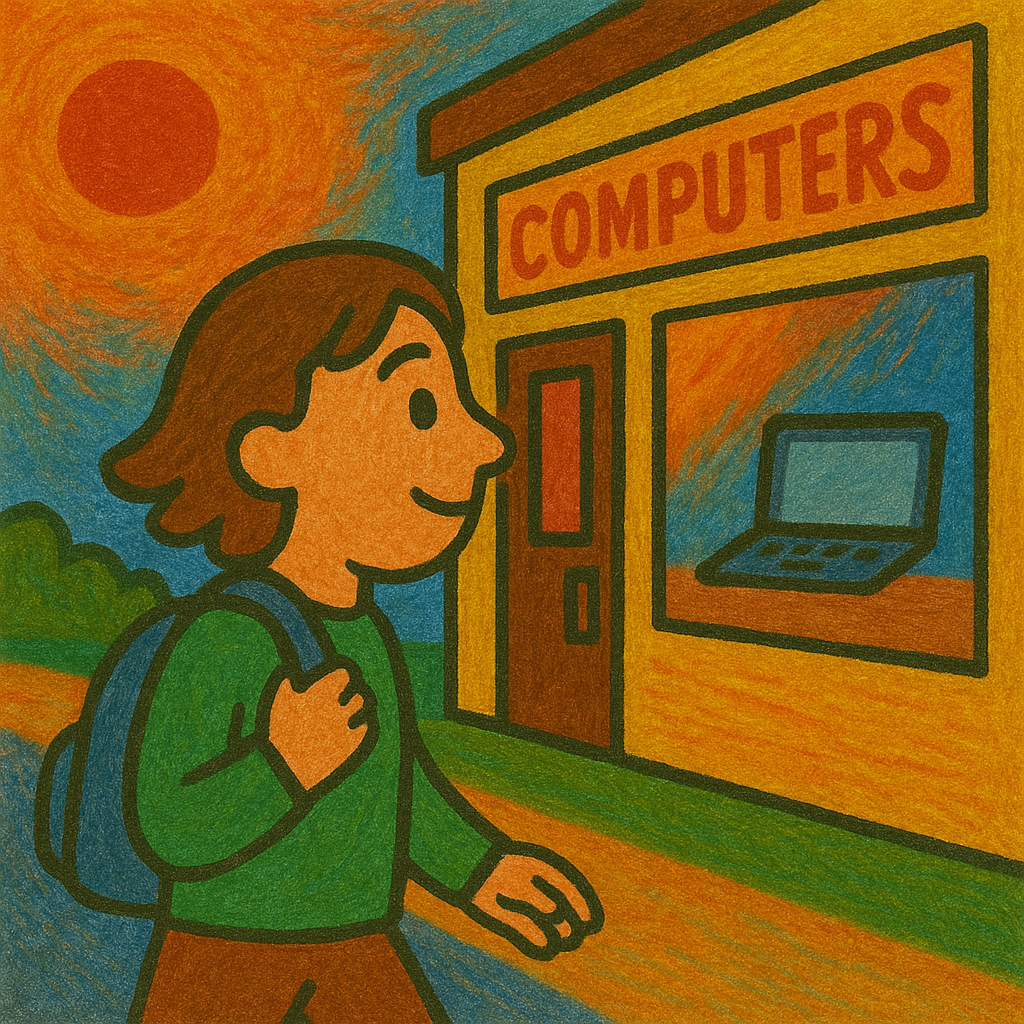
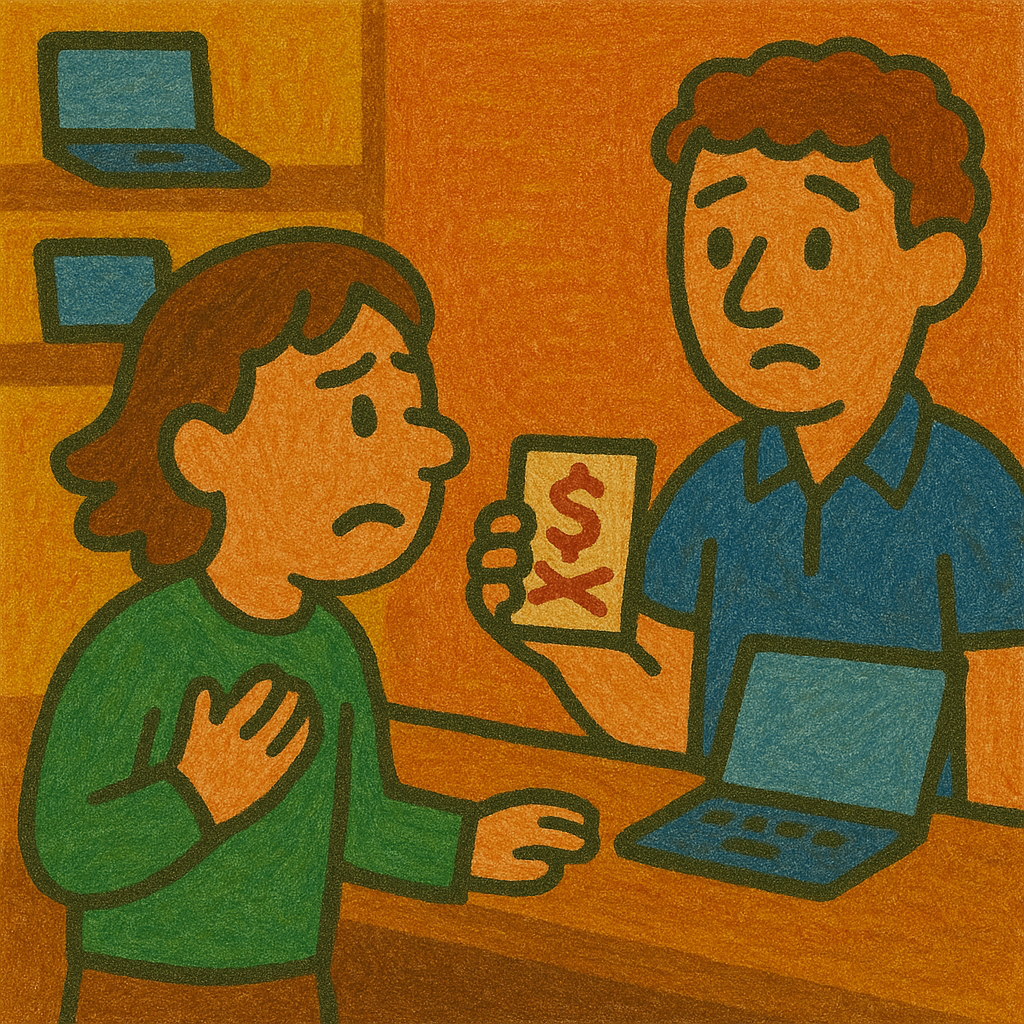
Exercise 2: Describe the Story with phrasal verbs!
Task: Look at the pictures and say what happened (using the past simple phrasal verbs) aloud!
Use any of the following words to help guide your story: end up, turn out, come across, carry on, mess up, run out (of), work out, sort out, look forward to, come up with, check out, figure out, freak out, pop in(to), find out, hang out (with).
For example, in picture 1, you might say “The laptop ran out of storage”.
1
2
3
4
5
6
7
8
9
Potential Answer
The girl’s computer ran out of memory. Her mate came across a good computer. The girl checked out the laptop website. She freaked out when she realised that it was on sale. It turnedout that the reason the price was so cheap was because a new laptop model came out. She popped into her local computer shop. She found out that there was a mistake with the price. Perhaps the staff messed up. The sales staff figured/sorted out a solution, and she ended up buying a different laptop. She hungoutwith her friend and told him all about it.
Past Perfect for IELTS Speaking
🧠 Quick Reminder: What is the Past Perfect?
Form:had + past participle Example: I had finished my homework before dinner. Meaning: Used to show that one past event happened before another past event. Why useful?: Shows advanced grammar (Band 7+) & time order clearly when describing stories or experiences
🧩 Useful Patterns to Practise
There are 4 useful patterns where the past perfect is commonly used in IELTS speaking:
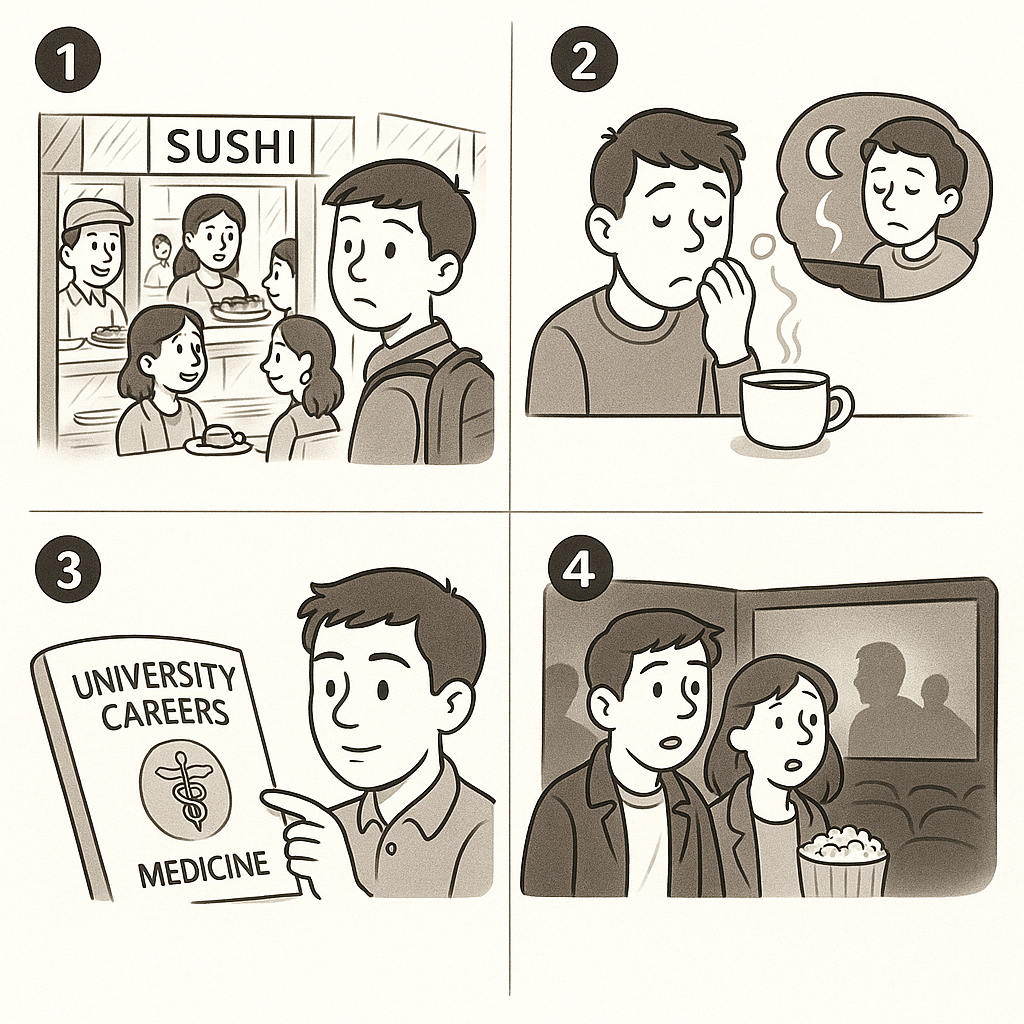
1. When one action happens before another “I had never tried sushi before I went to Japan.”
2. To show cause and effect in the past “I was tired because I hadworked late the night before.”
3. To show preparation or expectation “I had planned to study medicine, but I changed my mind.”
4. In storytelling “When we arrived, the movie had already started.”
Exercise 3: Past Perfect Gap fill
Pattern A – One action before another
Use past perfect to show what happened first.
1. When I arrived at the cinema, they had already started (already/start) the movie. 2. I was surprised because I ______ (never/see) such a big crowd before. 3. By the time I got to the station, the train ______ (already/leave). 4. When I called my friend, he ______ (just/go) out.
Answers
1. When I arrived at the cinema, they had already started the movie. 2. I was surprised because I had never seen such a big crowd before. 3. By the time I got to the station, the train had already left. 4. When I called my friend, he had just gone out.
Pattern B – Cause and effect in the past
Explain a situation by giving its earlier cause.
5. I was tired because I ______ (work) late the night before. 6. She failed the exam because she ______ (not/study) enough. 7. He was upset because someone ______ (take) his seat. 8. I felt relaxed because I ______ (finish) all my homework.
Answers
5. I was tired because I had worked late the night before. 6. She failed the exam because she had not studied enough. 7. He was upset because someone had taken his seat. 8. I felt relaxed because I had finished all my homework.
Pattern C – Showing preparation or expectation
Used for past plans or hopes that didn’t go as expected.
9. I ______ (plan) to travel to Italy, but the flights were too expensive. 10. We ______ (expect) to finish early, but there was a delay. 11. I ______ (hope) to meet her, but she didn’t come to the party. 12. They ______ (think) the meeting would be short, but it lasted two hours.
Answers
9. I had planned to travel to Italy, but the flights were too expensive. 10. We had expected to finish early, but there was a delay. 11. I had hoped to meet her, but she didn’t come to the party. 12. They had thought the meeting would be short, but it lasted two hours.
Pattern D – Storytelling
Very useful for IELTS Speaking Part 2 (describing experiences).
13. I was nervous because I ______ (never/speak) in front of a large audience before. 14. By the time the party started, we ______ (already/decorate) the whole place. 15. When the teacher entered, the students ______ (already/stop) talking. 16. I felt proud because I ______ (finally/achieve) my goal.
Answers
13. I was nervous because I had never spoken in front of a large audience before. 14. By the time the party started, we had already decorated the whole place. 15. When the teacher entered, the students had already stopped talking. 16. I felt proud because I had finally achieved my goal.
Exercise 4: Past Perfect Scenario Practice
Task: Think about the following situations and try to use the past perfect in different ways.
🎉 1. A time something didn’t go as planned
Talk about a situation that didn’t happen the way you expected. Use something like: I had planned / I had hoped / I had thought…
✈️ 2. A memorable trip
Describe a trip you really enjoyed. Include a past perfect detail: I hadn’t been there before or I had already visited…
🎓 3. A learning experience
Talk about something new you learned. Try using: I had never tried / I had studied / I had wanted to learn…
💼 4. A mistake you learned from
Describe a time you made a mistake. Use: I had forgotten / I hadn’t checked / I had assumed…
🕰️ 5. A situation where you were late or early
Explain what happened. Try: By the time I arrived, they had already started…
👨👩👧 6. A childhood memory
Talk about something that surprised or impressed you as a child. Use: I had never seen / I had always believed…
🌍 7. Something that changed your perspective
Describe an experience that made you see things differently. Use: Before that, I had thought / I hadn’t realised…
💭 8. Reflecting on an achievement
Talk about something you’re proud of. Include: I had worked / I had practised / I had prepared…
Used to & Would
💡 Introduction: Why These Are Powerful
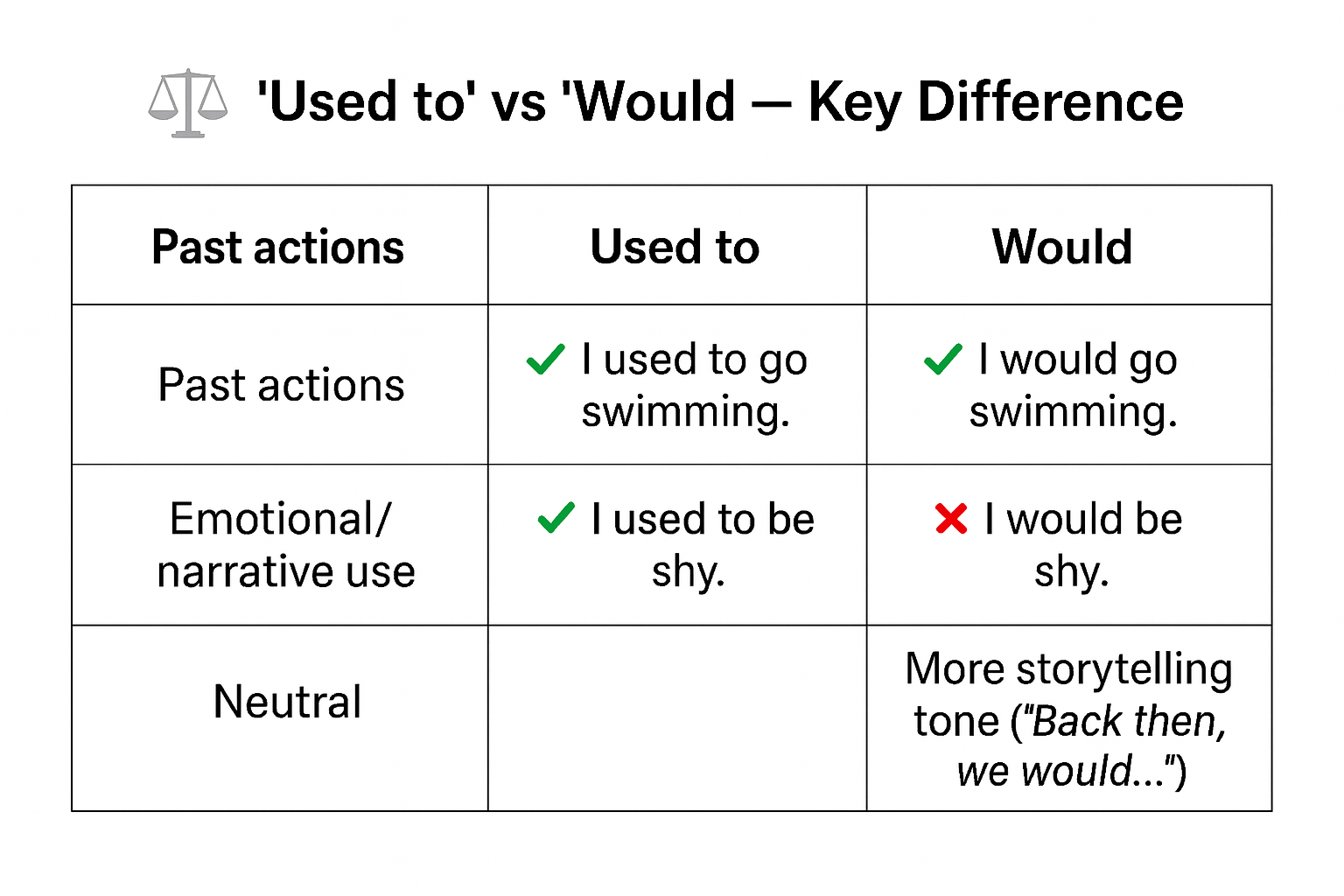
In IELTS Speaking, you often talk about your past, childhood, old habits, or how things have changed. The phrases “used to” and “would” help you do this in a natural, fluent, and advanced way. Using them correctly can make your grammar sound more sophisticated (Band 7+ range).
Common Speaking Situations
Consider strategically when you will likely use these tenses. Here are some to think about:
Part 1: Daily life, childhood
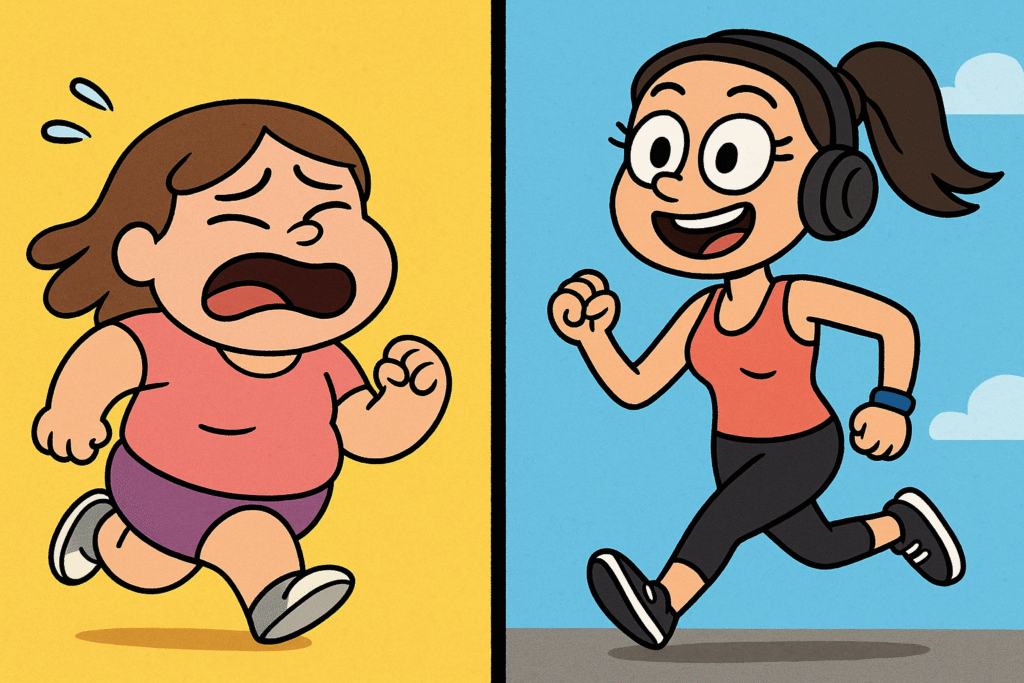
IELTS SpeakingQuestion: Do you enjoy exercising? Answer: I didn’t use to like it at all, but now I go running almost every morning.
Part 2: Storytelling
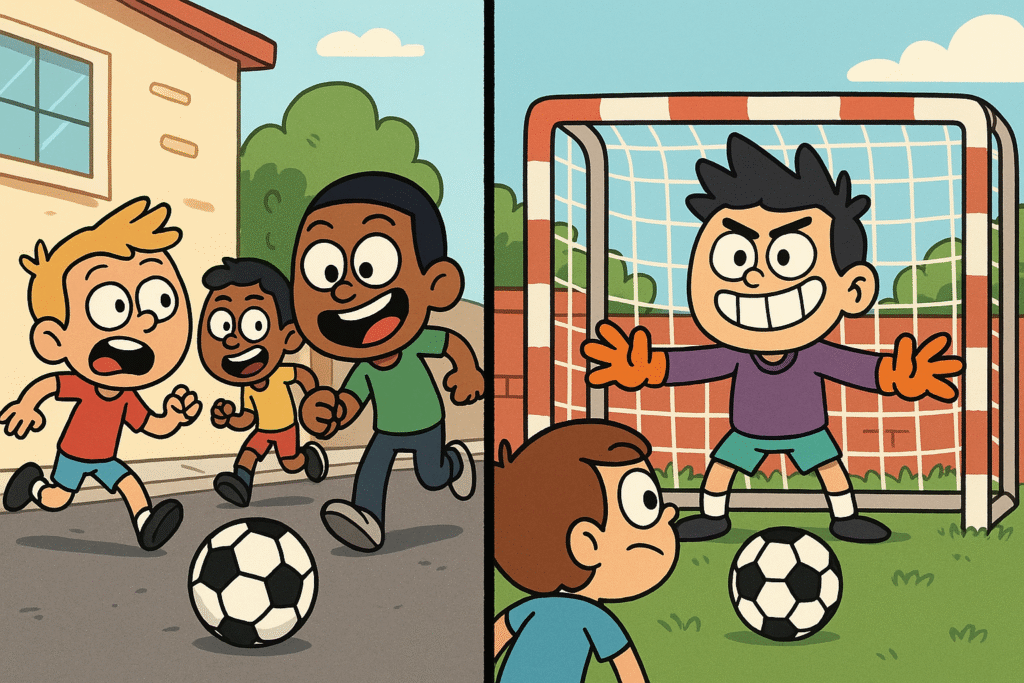
IELTS SpeakingQuestion: Describe a game you played as a child. Answer: When I was a kid, we would always play football in the street after school. I used to be the goalkeeper most of the time!
Part 3: Changes in society
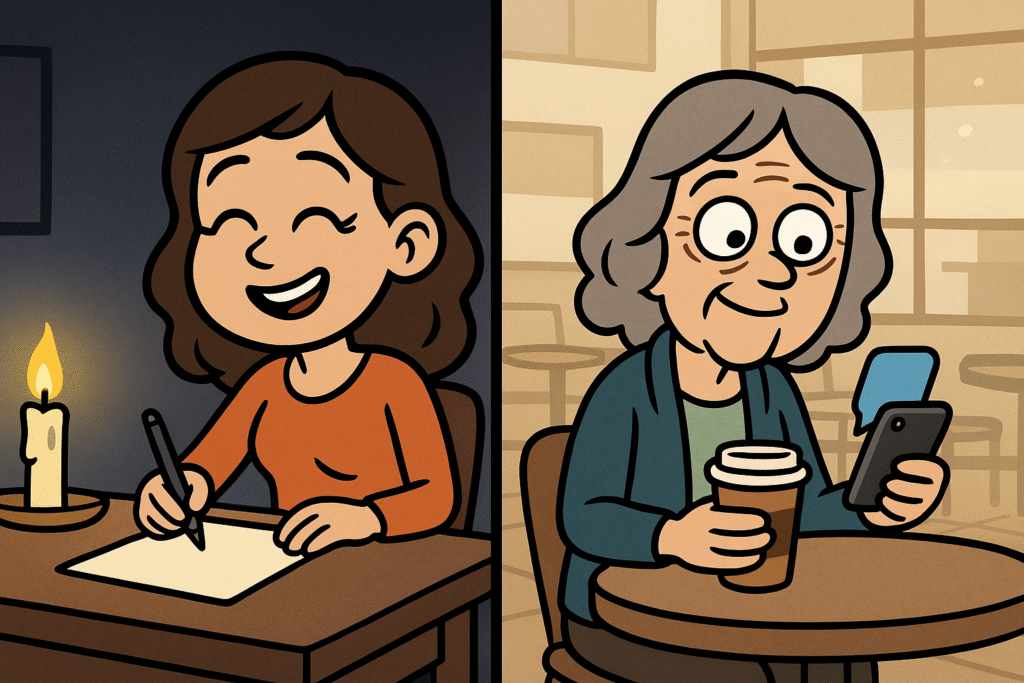
IELTS SpeakingQuestion: How has communication changed in recent years? Answer: People used to write letters or meet face to face, but now most communication happens online.
🌟 Useful Patterns and Phrases
🧒 Childhood & Habits
“When I was a kid, I used to…” “I would always…” “Back then, we would…” “Every summer, we would…”
💭 Contrast Between Past and Now
“I used to…, but now I…” “I didn’t use to…, but these days I…”
🌍 Describing Change (Places / Society)
“People used to think…, but now…” “There used to be a park here, but it’s been replaced by a shopping mall.”
Exercise 5: Used to/ Would Scenario Practice
Task: Use used to/ would to answer the following ideas:
🧒 Childhood & Habits
Talk about something you used to do every day when you were a child.
Describe a game or hobby you enjoyed when you were younger.
What kinds of food did your family use to eat when you were a child?
Tell me about a place you would visit regularly when you were growing up.
Describe a person (teacher, friend, or neighbour) who used to be important in your childhood.
🏡 Home & Environment
Describe how your neighbourhood used to look when you were younger.
Talk about a building or park that used to be there but isn’t anymore.
How has your home changed since you were a child?
Describe a typical weekend in your hometown when you were younger.
Compare your old house and the place you live now.
🎓 School & Learning
Talk about a teacher who used to inspire you.
Describe what you used to study or enjoy at school.
What kind of student were you? What things would you often do in class?
Did you have any school traditions that you would look forward to every year?
How has education changed since you were a child?
🎉 Leisure & Lifestyle
Compare how people used to spend weekends and how they do now.
Describe a family activity you used to do together.
Talk about entertainment or technology people used to rely on.
What kind of clothes or music used to be popular when you were younger?
Talk about a holiday tradition your family would always follow.
🌍 Society & Change (IELTS Part 3 style)
How have people’s communication habits changed over time?
How did people use to travel in your country compared with now?
How has shopping changed since your parents’ generation?
What activities used to be more common before smartphones?
Do you think life used to be simpler in the past? Why or why not?