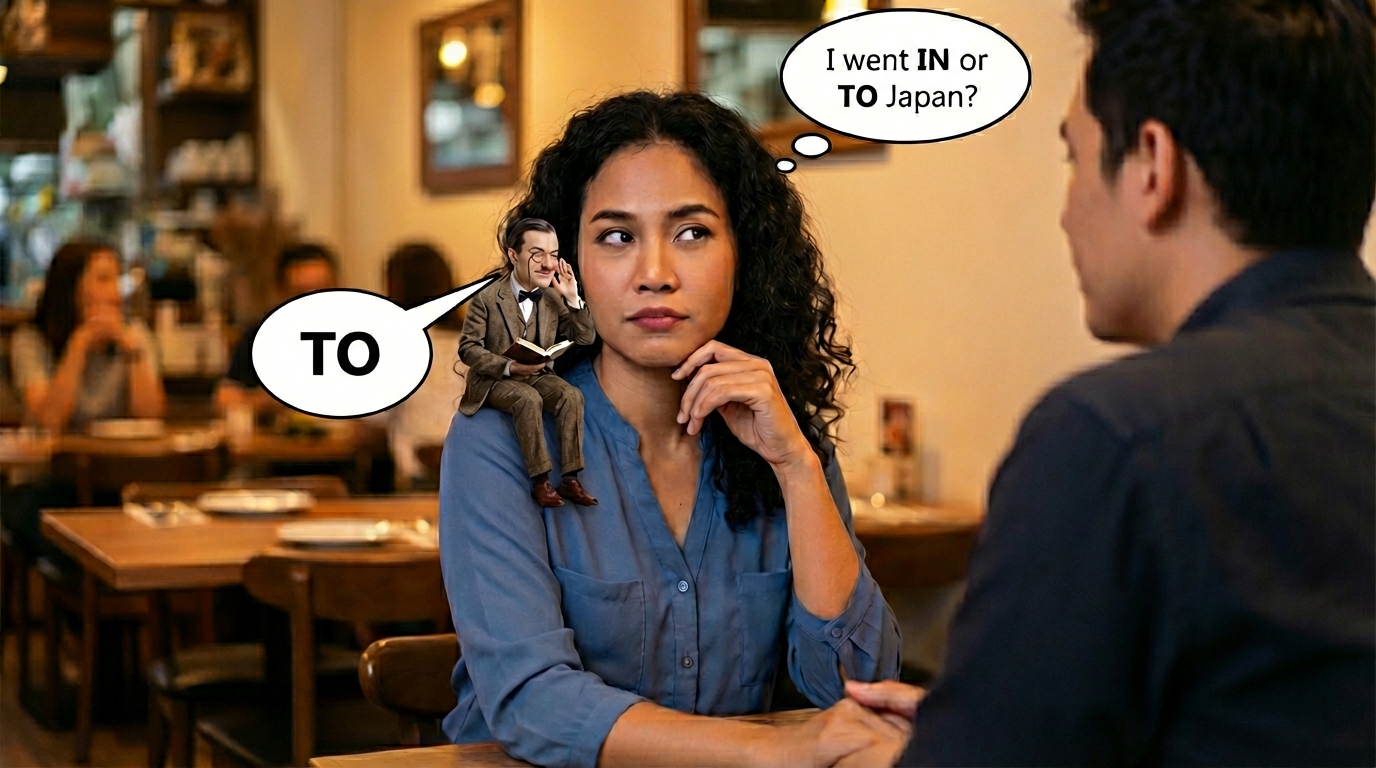
Preposition errors are often a result of translation from one’s own language and therefore each nationality faces different issues.
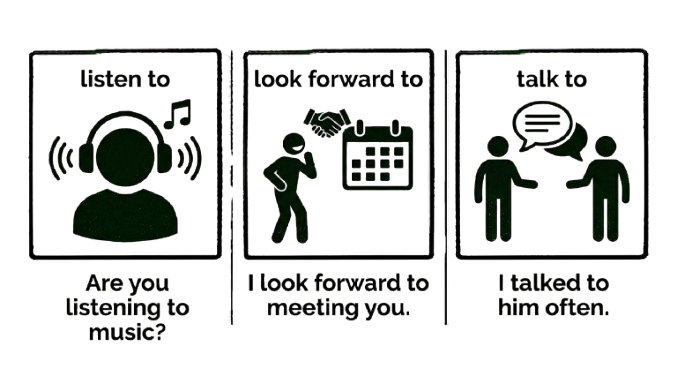
For example, in English, we say “I listen TO music”, but in romance languages (🇪🇸🇮🇹🇫🇷🇵🇹🇷🇴) it translates to something like “I listen music”, “I listen the music” or “I listen of the music”.
Let’s start off with an initial preposition evaluation.
Section 1: Mastering Space and Time (Nuances & Traps)
You know the basics. These are the specific areas where Band 6.5 students consistently slip up under pressure.
The Transportation Trap
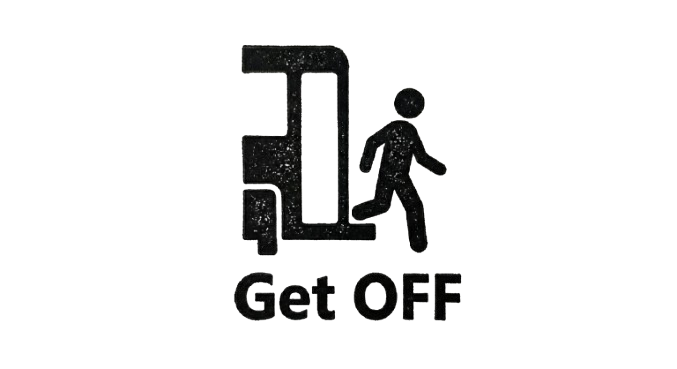
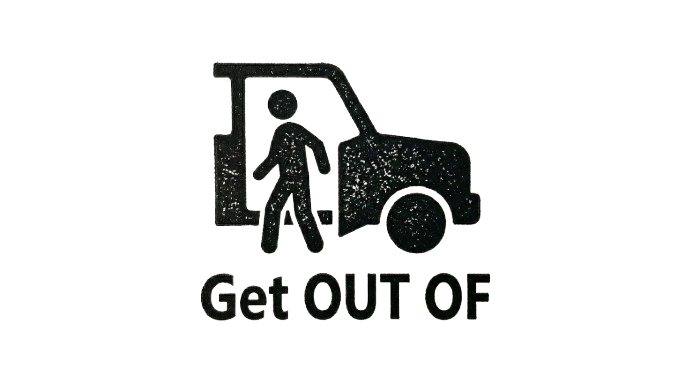
Rule: If you can walk inside it -> ON (bus, train, plane, ship). If you crouch to enter -> IN (car, taxi, helicopter).
“I came here in the bus.” ➜ “I came here on the bus/train/plane.”
“I was on a taxi.” ➜ “I was in a taxi/car/helicopter.”


The “Arriving” Distinction
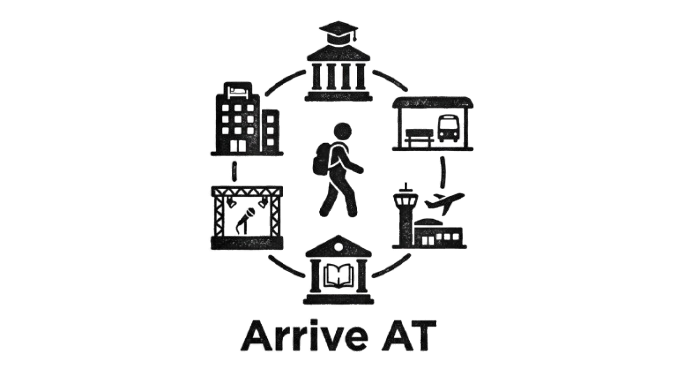
This is a very common error. The preposition changes depending on the size of the destination.
Arrive IN a city or country (large area).
Correct: “I arrived in London five years ago.” (NOT arrived at London).
Note! If we use the verb “go“, we use the preposition “to“.
Correct: “I went to London five years ago.” (NOT went in or at London).”
If we use the verb “visit”, we don’t use any preposition.
Correct: “I visited London five years ago.” (NOT visited to London).”
Arrive AT a specific building, station, or event (a point on a map).
Correct: “We arrived at the hotel late last night.” (NOT arrived in the hotel).
Correct: “We met at a conference.” (Not in a conference).
Correct: “I studied at university.” (Common slip-up: in university).
The Night Exception:
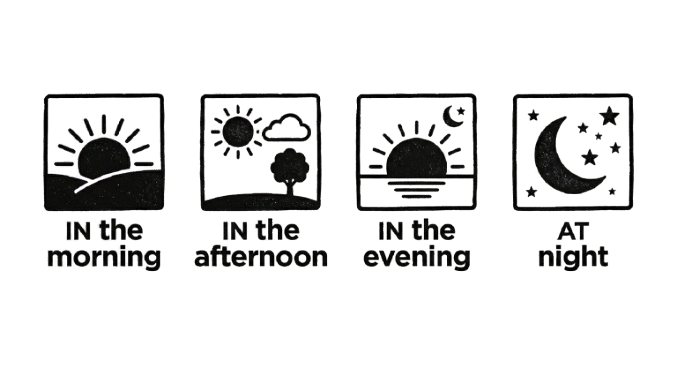
We say “in the morning,” “in the afternoon,” but “at night.” (Unless you mean during a specific night: “I woke up twice in the night.”)

Until, By, During & At
Confusing these four words ruins the accuracy of your future plans or past narratives.
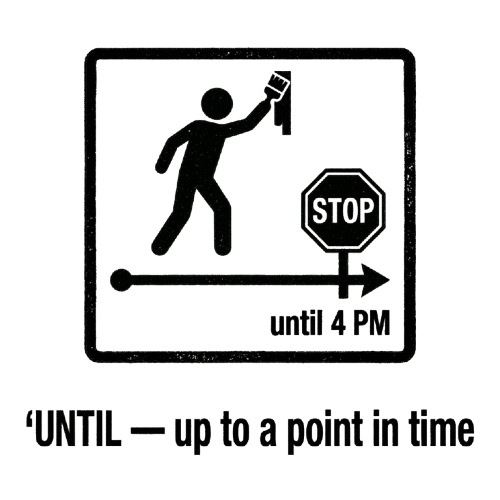
UNTIL = The Duration (An action that continues up to a point).
Correct: “I will work until 6 PM.” (I am working continuously from now to 6).
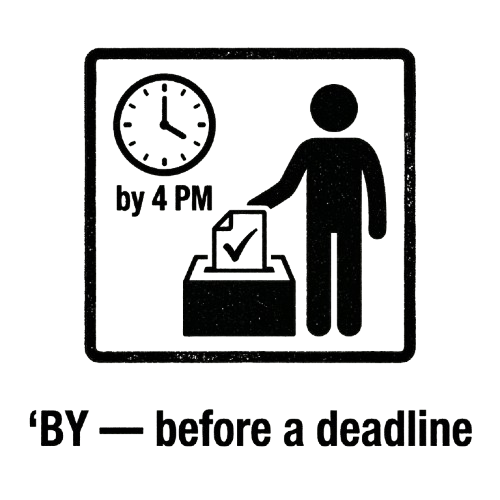
BY = The Deadline (An action that happens before a point).
Correct: “I will finish the report by 6 PM.” (At 6 PM, the report will be finished. I am not finishing it continuously).
Band 6 Error: “I need to submit the application until Friday.” (Incorrect, unless you plan to spend all week submitting it repeatedly).
Many learners misuse during when describing when something happens within a period, not at its start or end.
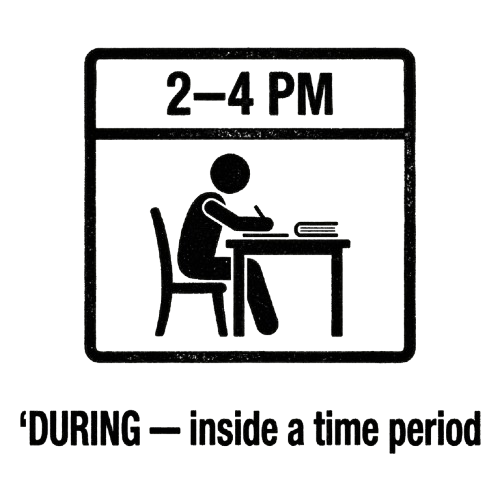
DURING = Inside a Period (An action/event happens at some point within a larger time block.)
Correct: “I read several books during the summer.”(At unspecified times within the summer.)
Correct: “She fell asleep during the movie.” (Inside the time span of the movie.)
Band 6 Error: “I will finish the report during 6 PM.” (Incorrect—6 PM is a specific moment, not a period.)
Correct: “I will finish the report at 6 PM.” Or: “I will finish the report during the evening.”
Key Rule: Use during only when the time reference is a period (the meeting, the weekend, the flight, the concert), not when it is a single time point (6 PM, Monday, 3:30).
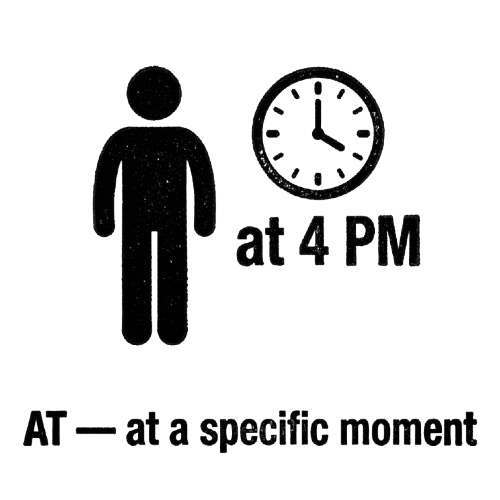
AT = A Precise Point in Time (Used for exact times, specific moments, or fixed points.)
Correct: “I will finish the report at 6 PM.”
Correct: “She laughed at that moment”
Media and Technology
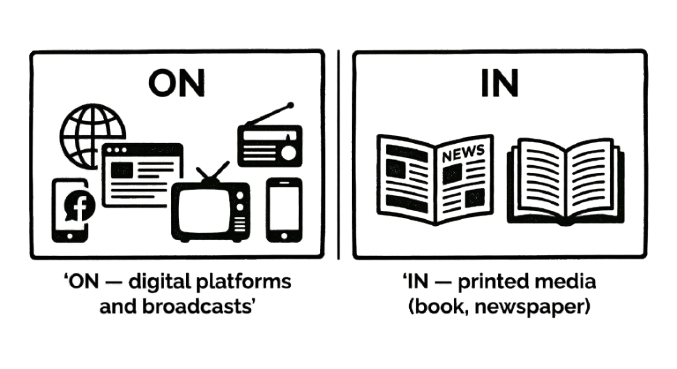
We are almost always ON electronic media.
On the internet, on a website, on social media, on the radio, on TV, on my phone.
Exception: We read things IN a newspaper or IN a book.
Section 1 Check:
Part 1: Multiple Choice (15 Points)
Circle the correct option for each sentence.
- The train stopped at the station and many passengers got ______.
a) out of
b) off
c) out - We finally arrived ______ Tokyo after a twelve-hour flight.
a) to
b) at
c) in - I usually feel most energetic ______ the morning.
a) on
b) at
c) in - Please make sure you submit your final essay ______ Friday. (It is the deadline).
a) until
b) by
c) during - I found an amazing recipe ______ a website yesterday.
a) in
b) on
c) at - The taxi pulled over and we quickly got ______.
a) in
b) on
c) to - What time did you arrive ______ the office today?
a) in
b) to
c) at - Don’t watch scary movies ______ night if you want to sleep well.
a) in
b) during
c) at - The shop is open from 9 AM ______ 6 PM.
a) by
b) until
c) during - My grandmother still prefers reading the news ______ the newspaper rather than online.
a) on
b) in
c) by - It is difficult for tall people to get ______ tiny sports cars.
a) out of
b) off
c) on - Are you planning to ______ Italy this summer?
a) visit to
b) go
c) visit - Please don’t look at your phone ______ the meeting.
a) during
b) by
c) until - We heard the breaking news ______ the radio while driving.
a) in
b) on
c) through - The concert starts sharply ______ 8:00 PM.
a) in
b) on
c) at
Part 2: Fill in the Blanks (10 Points)
Complete the sentences using the correct prepositions from the box below. You may use some words more than once. If no preposition is needed, draw a symbol (Ø).
[ in | on | at | by | until | during | off | out of ]
- Hurry up! The bus is leaving. Let’s get ________ quickly.
- I read an interesting interview ________ a magazine while waiting at the dentist.
- We need to finish this project ________ the end of the week, or the boss will be angry.
- They arrived ________ New York City in the middle of a snowstorm.
- He fell asleep ________ the opera because it was so boring.
- I spend too much time scrolling ________ social media.
- The meeting is scheduled to happen ________ the afternoon.
- Sarah wants to visit ________ her cousins in Canada next year.
- The limousine stopped and the famous actor got ________ the back seat.
- We will wait here ________ you come back.
Part 3: Error Correction (10 Points)
Find the error in each sentence and rewrite the sentence correctly. If the sentence is already correct, write “Correct”.
- We arrived to the hotel very late last night.
- I saw the information in the internet.
- She got off the taxi and paid the driver.
- I am going to visit to my grandmother today.
- The package should arrive until Tuesday at the latest.
- We watched a great documentary in TV last night.
- It’s dangerous to walk alone in night in that area.
- The flight attendants asked us to get on the plane.
- He has a meeting at Monday morning.
- I read about the accident on a book about history.
Answers
Reveal Answers
Part 1: Multiple Choice (15 Points)
- b) off
- c) in
- c) in
- b) by
- b) on
- a) in
- c) at
- c) at
- b) until
- b) in
- a) out of
- c) visit
- a) during
- b) on
- c) at
Part 2: Fill in the Blanks (10 Points)
- on
- in
- by
- in
- during
- on
- in
- Ø (nothing)
- out of
- until
Part 3: Error Correction (10 Points)
1. We arrived at the hotel very late last night.
2. I saw the information on the internet.
3. She got out of the taxi and paid the driver.
4. I am going to visit Ø my grandmother today. (Remove “to”)
5. The package should arrive by Tuesday at the latest.
6. We watched a great documentary on TV last night.
7. It’s dangerous to walk alone at night in that area.
8. Correct.
9. He has a meeting in the morning.
10. I read about the accident in a book about history.
Section 2: The “Zero Preposition” Trap (Crucial for Band 7)
In many languages, certain verbs require a preposition to connect to an object. In English, these specific verbs connect directly. Adding a preposition here is an immediate signal of L1 interference (translating from your mother tongue).
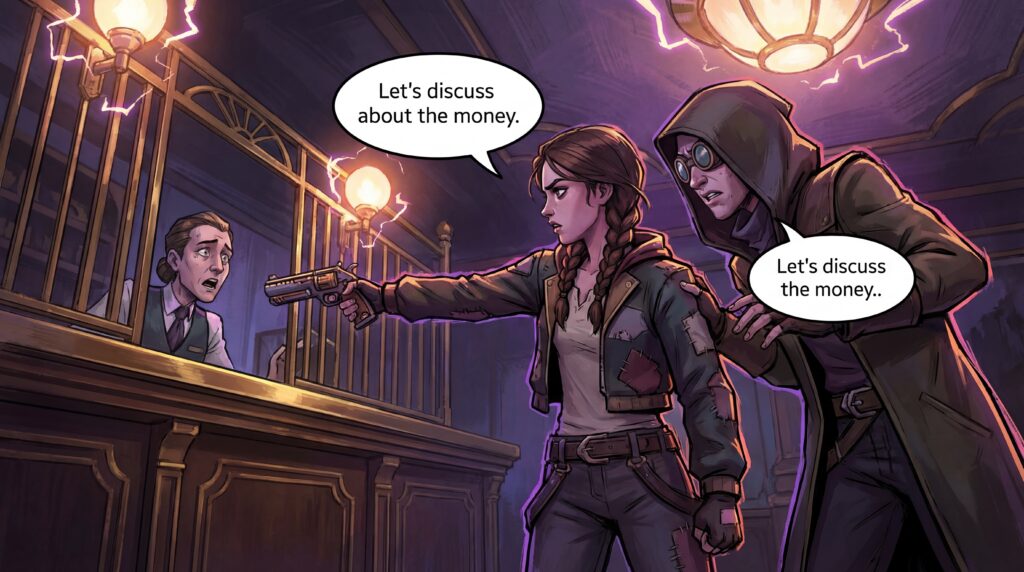
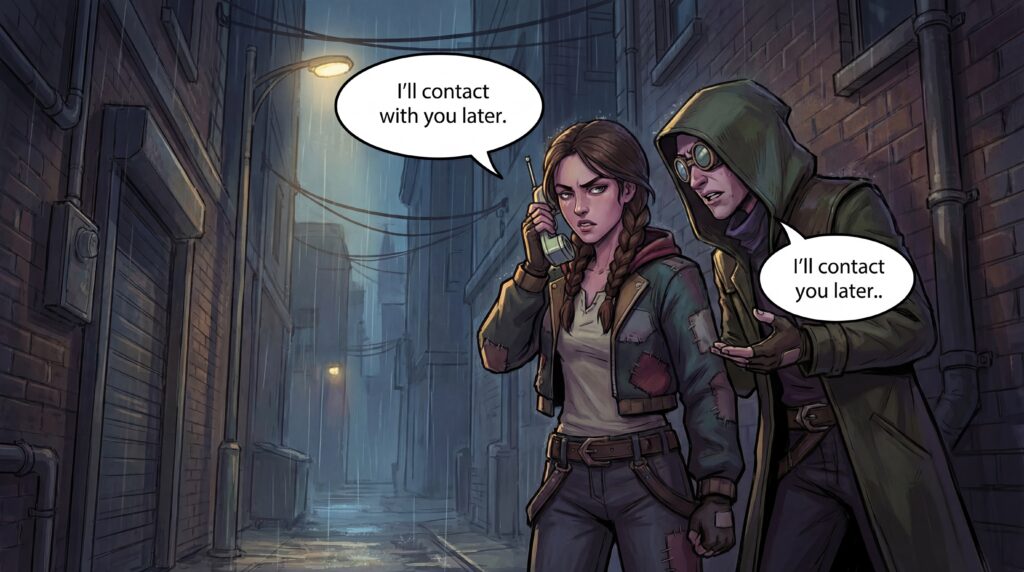
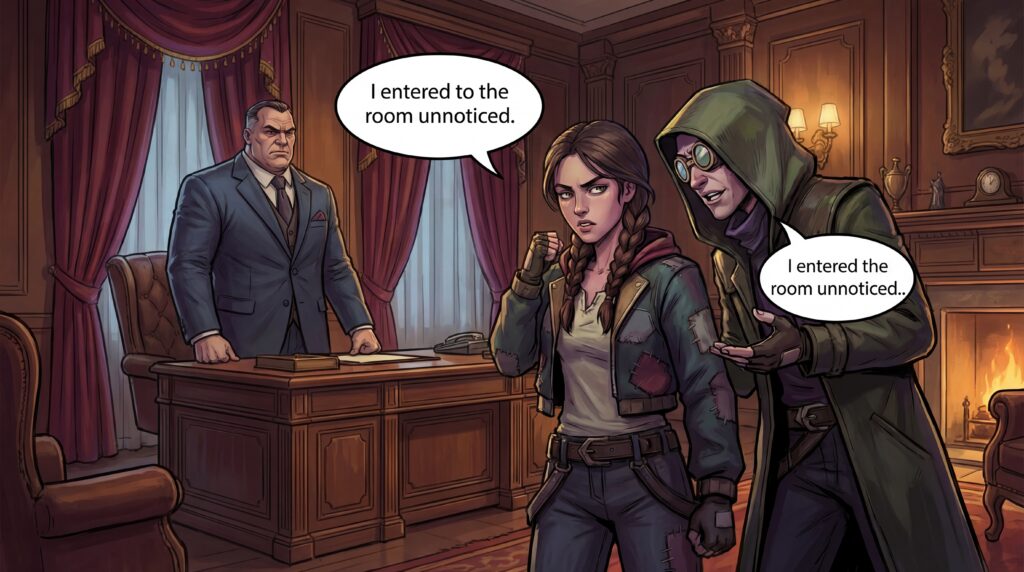
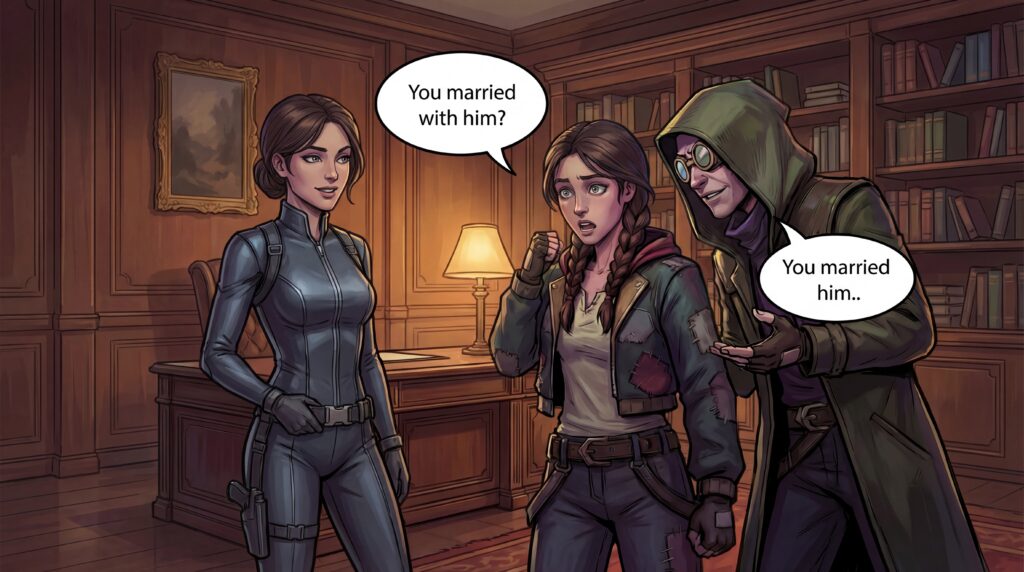
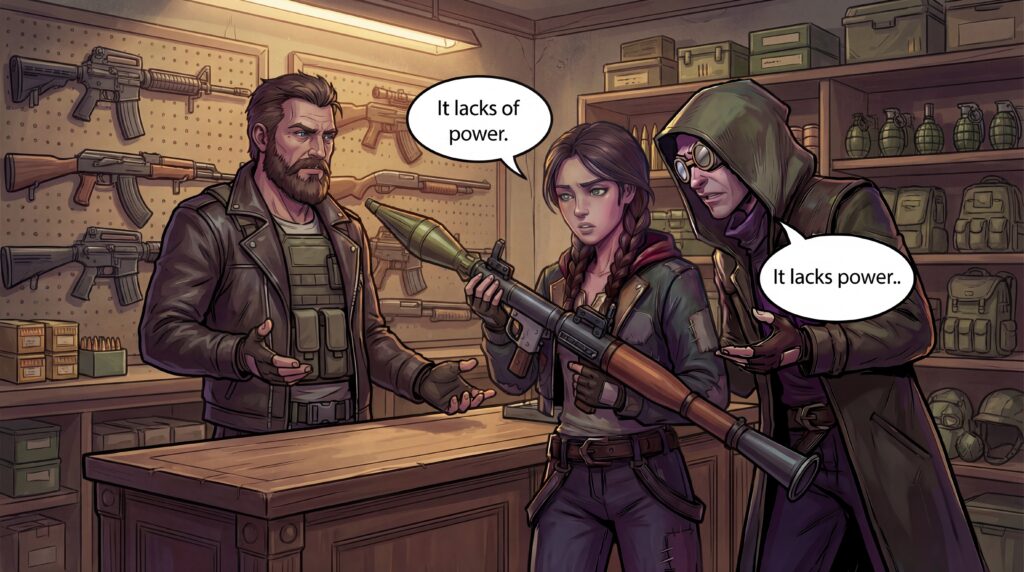
The most common verbs that don’t require a preposition: discuss, contact, enter, marry, lack, answer, call, tell, mention, reach, approach, visit, join, resembles and meet.
RULE: These verbs hit the noun directly.
The Underlying Reason for Confusion (Noun vs. Verb)
A major reason learners fall into this trap is that while the verb takes zero preposition, the noun form of the same word often requires one.
Compare these pairs:
NOUN: Our visit to the museum was fun. (Preposition required)
VERB: We must discuss the issue. (Zero Preposition)
NOUN: We had a discussion about the issue. (Preposition required)
VERB: Please answer the question. (Zero Preposition)
NOUN: What is the answer to the question? (Preposition required)
VERB: I need to contact them. (Zero Preposition)
NOUN: I have lost contact with them. (Preposition required)
VERB: We visited the museum. (Zero Preposition)
Section 2 Check:
Part 1: Multiple Choice (15 points)
Instructions: Read the sentences carefully. Determine if a preposition is needed in the blank. Circle the correct option. Ø = No Preposition.
- We had a long discussion ______ the budget cuts yesterday.
a) about
b) to
c) Ø - We need to discuss ______ the budget cuts immediately.
a) about
b) with
c) Ø - Did you get an answer ______ your email yet?
a) to
b) at
c) Ø - Please answer ______ the phone; it’s ringing very loudly.
a) to
b) for
c) Ø - My visit ______ Rome was the highlight of my summer.
a) in
b) to
c) Ø - I plan to visit ______ Rome again next year.
a) to
b) at
c) Ø - You should contact ______ the HR department about your benefits.
a) with
b) to
c) Ø - I have lost all contact ______ my old friends from high school.
a) with
b) to
c) Ø - The army’s sudden approach ______ the city scared the citizens.
a) to
b) at
c) Ø - As the dog approached ______ the squirrel, it ran up a tree.
a) to
b) near
c) Ø - They entered ______ the building through the side door.
a) into
b) in
c) Ø - The judges’ decision is final; you cannot appeal ______ it.
(Note: Appeal as a verb takes “to” in legal contexts, making this a tricky exception to the general transitive rule!)
a) to
b) for
c) Ø - Did he mention ______ the specifics of the contract?
a) about
b) of
c) Ø - There was no mention ______ the contract in the meeting minutes.
a) about
b) of
c) Ø - She will marry ______ her best friend next month.
a) with
b) to
c) Ø
Part 2: Find and Fix the Error (10 points)
Instructions: Read the sentences below. Some contain a “Zero Preposition Trap” error, and some are correct.
- If the sentence is incorrect, cross out the unnecessary preposition.
- If the sentence is correct, write “OK” in the blank space at the end.
- When will we reach to the destination? ________________
- The CEO needs to contact with the investors today. ________________
- We had an interesting discussion about politics. ________________
- I must ask to the teacher for an extension on my paper. ________________
- She resembles her mother so much. ________________
- They entered into the dark cave without a flashlight. ________________
- Please tell to me the whole story. ________________
- Would you like to join us for lunch? ________________
- I met with your brother at the party last night. (Standard encounter) ________________
- What is the answer to question number five? ________________
Part 3: Sentence Production (2 points)
Instructions: Choose ONE of the words below. Write two separate sentences using that word.
- Sentence A: Use the word as a transitive verb (Zero Preposition).
- Sentence B: Use the word as a noun (Preposition required).
Choose one word: [ ANSWER / VISIT / CONTACT ]
Your chosen word: _______________
Sentence A (Verb):
Sentence B (Noun):
Answers
Reveal Answers
Part 1: Mixed Multiple Choice (15 points)
- A (discussion about) – Noun
- C (discuss Ø) – Verb
- A (answer to) – Noun
- C (answer Ø) – Verb
- B (visit to) – Noun
- C (visit Ø) – Verb
- C (contact Ø) – Verb
- A (contact with) – Noun
- A (approach to) – Noun
- C (approached Ø) – Verb
- C (entered Ø) – Verb
- A (appeal to) – Verb exception! “Appeal” in a legal sense is intransitive and takes “to”.
- C (mention Ø) – Verb
- B (mention of) – Noun (We usually say a “mention of” something, sometimes “about”)
- C (marry Ø) – Verb
Part 2: Find and Fix the Error (10 points)
16. When will we reach to the destination?
17. The CEO needs to contact with the investors today.
18. OK (noun form)
19. I must ask to the teacher for an extension on my paper.
20. OK
21. They entered into the dark cave without a flashlight.
22. Please tell to me the whole story.
23. OK
24. I met with your brother at the party last night. (Since it is a standard encounter, “with” is unnecessary).
25. OK (noun form)
Part 3: Sentence Production (5 points)
Give full points if Sentence A uses the verb transitively (no prep) and Sentence B uses it as a noun with an appropriate preposition.
Examples of correct answers:
Contact: I will contact them. / B: I am in contact with them.
Answer: Please answer the door. / B: Do you have an answer to my question?
Visit: We will visit my aunt. / B: Our visit to the zoo was fun.
Section 3: Dependent Prepositions
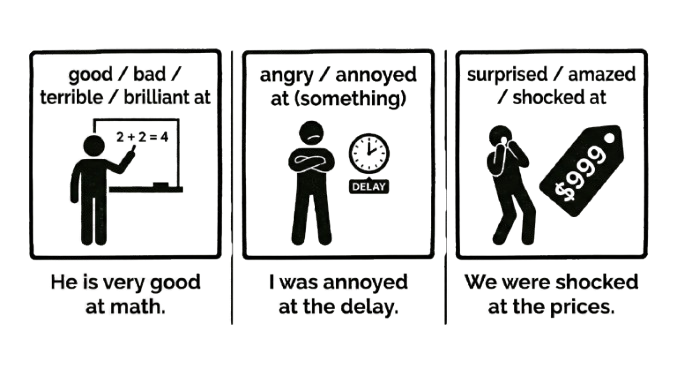
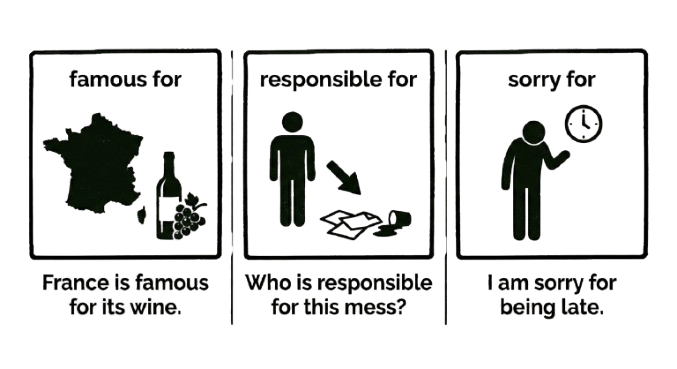
1. Adjective + Preposition Combinations
These describe feelings, states, or qualities related to something else.
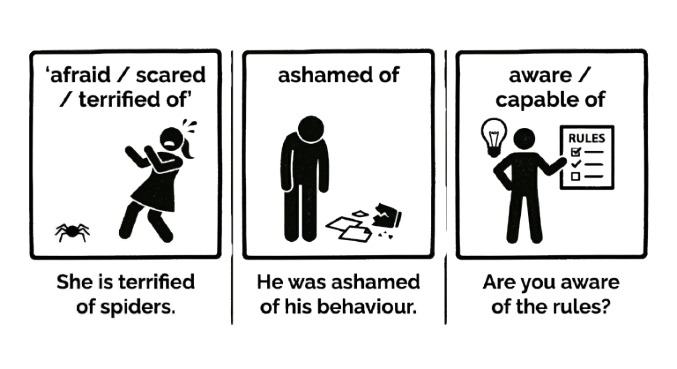
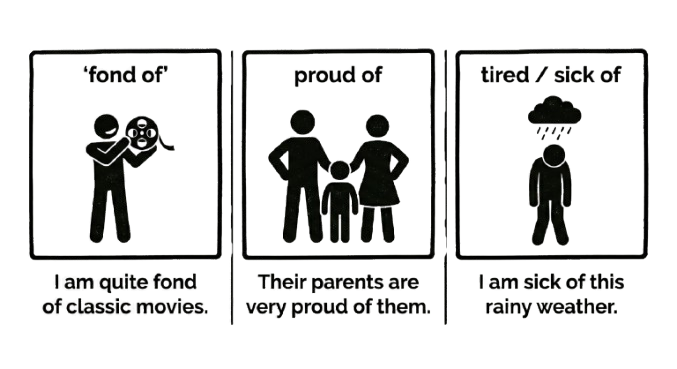
OF
TO
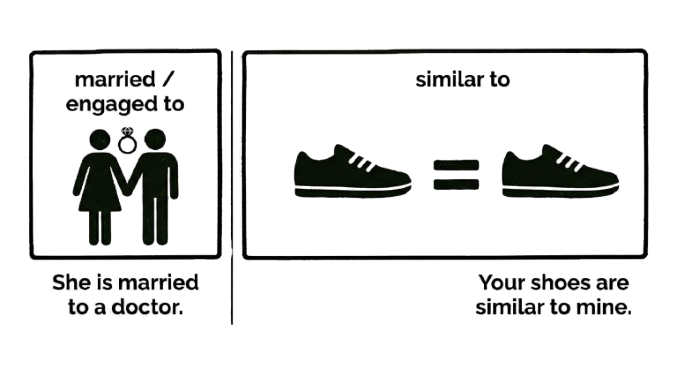
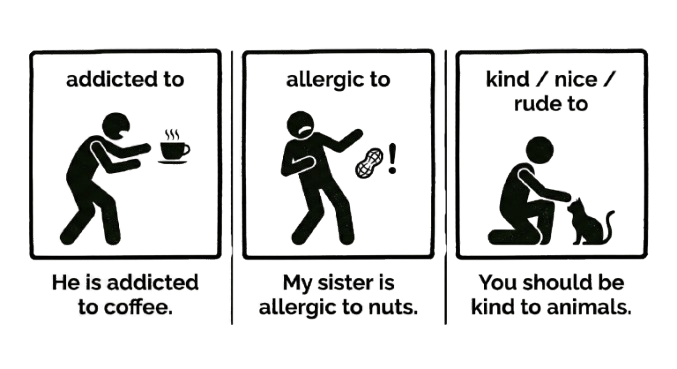
IN
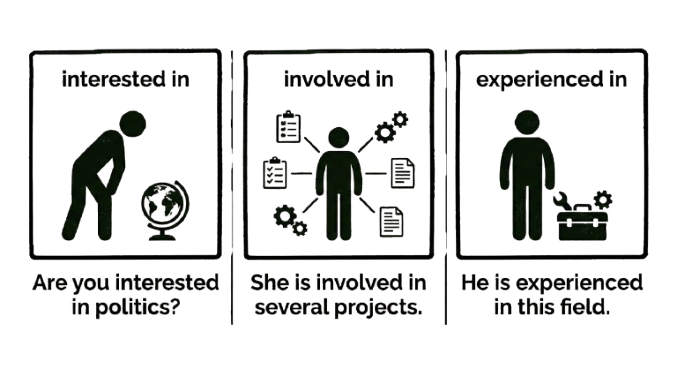
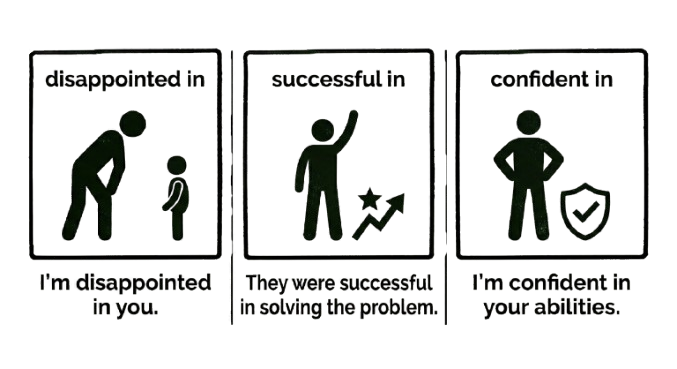
ABOUT
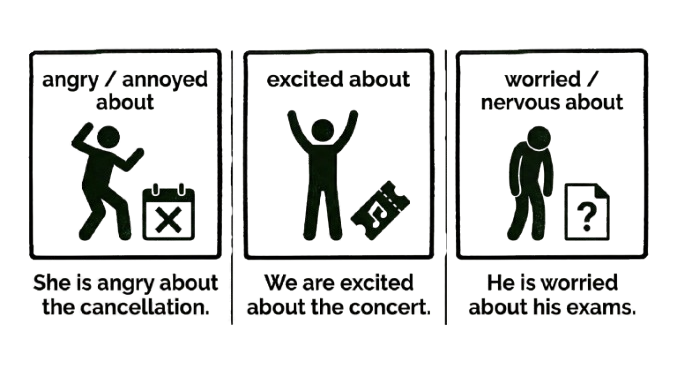
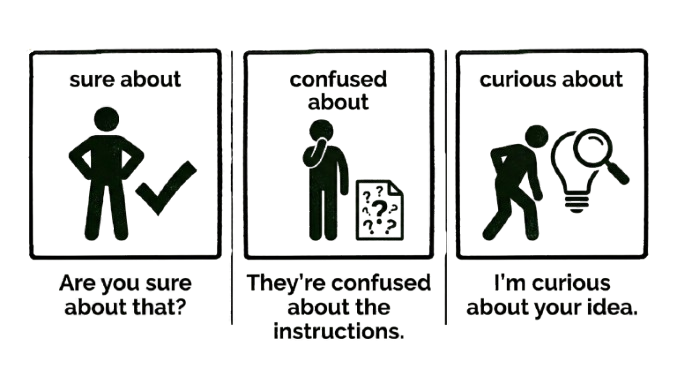
AT
FOR
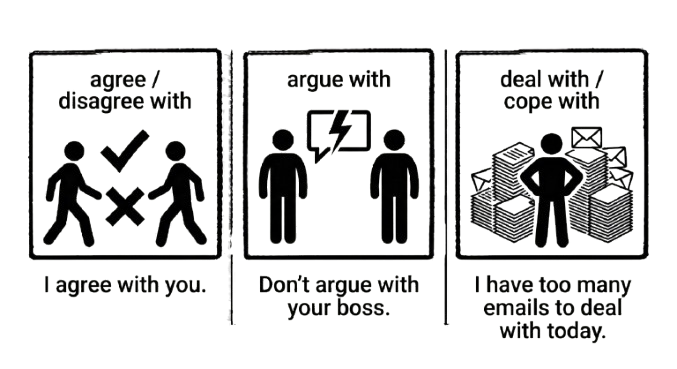
2. Verb + Preposition Combinations
These verbs require a specific preposition to connect to their object.
ON
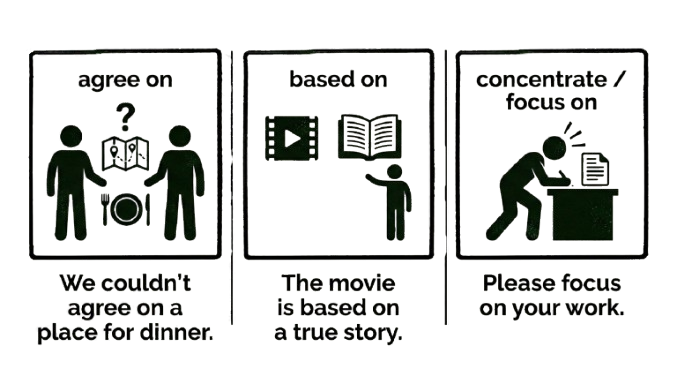
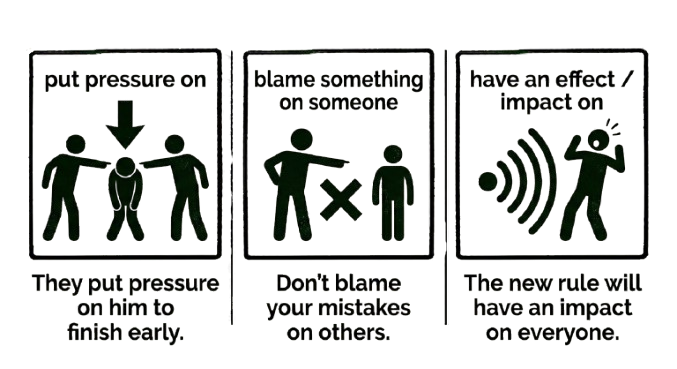
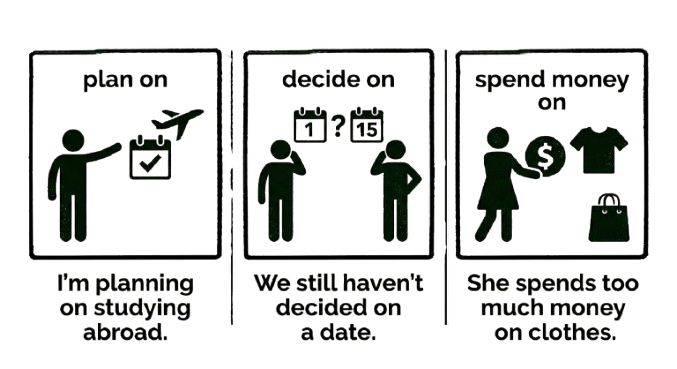
TO
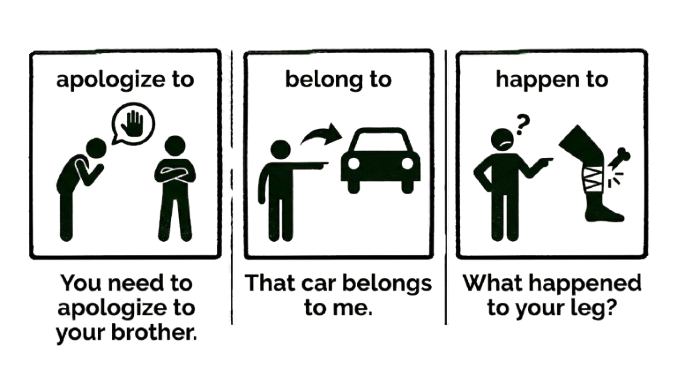
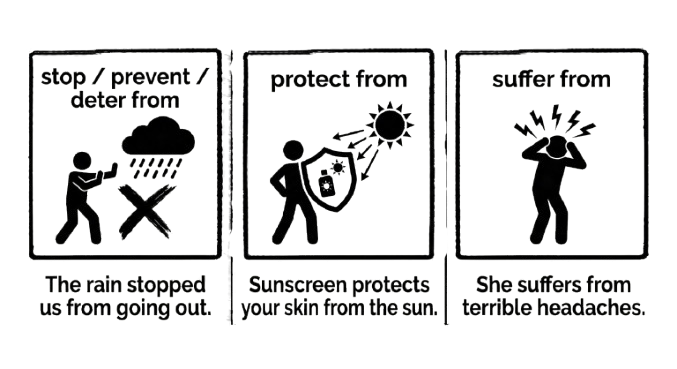
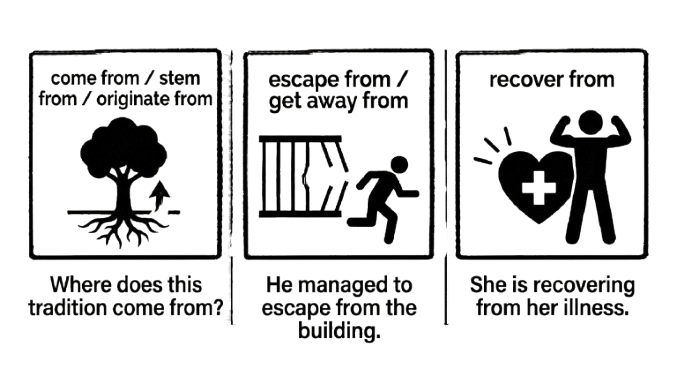
FROM
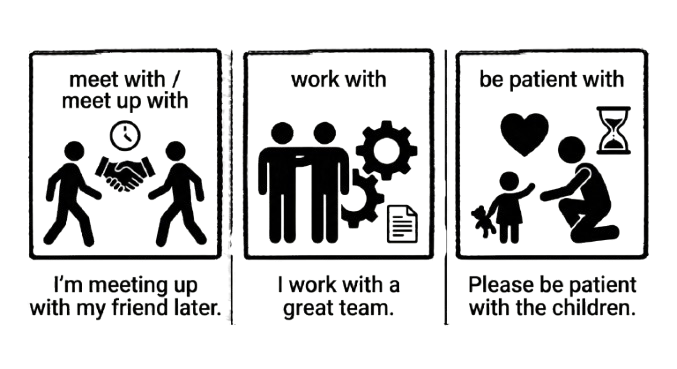
WITH
Section 3 Check:
Part 1: Multiple Choice (15 Points)
Circle the correct preposition to complete each sentence.
- She is very interested ______ learning how to code.
a) on
b) in
c) with - We really need to focus ______ the main problem right now.
a) to
b) at
c) on - Many people suffer ______ allergies in the springtime.
a) of
b) from
c) with - Did you know my brother is married ______ a professional chef?
a) with
b) to
c) for - I look forward ______ meeting you next week.
a) about
b) for
c) to - How do you deal ______ difficult customers at work?
a) with
b) about
c) of - Her parents are very proud ______ her academic achievements.
a) on
b) with
c) of - Don’t argue ______ your mother; she is usually right.
a) to
b) at
c) with - The teacher was angry ______ the student for cheating on the test.
a) about
b) with
c) at - How much money did you spend ______ those new shoes?
a) for
b) on
c) in - It took him a long time to recover ______ the surgery.
a) of
b) by
c) from - Please don’t give him peanuts; he is severely allergic ______ them.
a) from
b) with
c) to - You must listen ______ the instructions carefully before starting.
a) at
b) to
c) on - We were all very surprised ______ the sudden news.
a) on
b) by
c) at - Excuse me, does this umbrella belong ______ you?
a) to
b) with
c) for
Part 2: Fill in the Blanks (10 Points)
Complete the sentences using the correct prepositions from the box below. You must use some prepositions more than once.
[ of | to | in | about | at | for | on | from | with ]
- Are you fully aware ________ the rules of this game?
- The bad weather prevented us ________ going to the beach.
- We are looking for someone experienced ________ web design.
- You should apologise ________ your boss.
- My sister is brilliant ________ mathematics.
- I completely agree ________ you on that point.
- I am sick and tired ________ listening to this noise.
- It is never okay to be rude ________ service staff.
- The new movie is based ________ a true story.
- Please try to concentrate ________ your homework.
Part 3: Gapped Sentences (10 Points)
Fill in the correct preposition. There is no word box for this section.
- He felt very ashamed ________ his rude behavior last night.
- She is struggling to cope ________ the pressure of her new job.
- Did you hear? Sarah got engaged ________ Mark last week!
- Do you plan ________ going to the concert this weekend?
- You need to be more confident ________ your own abilities.
- My parents were quite disappointed ________ my poor exam results.
- The prisoner managed to escape ________ the guards.
- I need to talk ________ the manager about a complaint.
- We were shocked ________ the high prices in that shop.
- Where does this strange tradition originate ________?
Answers
Reveal Answers
Part 1: Multiple Choice (15 Points)
- b) in (interested in – Adj)
- c) on (focus on – Verb)
- b) from (suffer from – Verb)
- b) to (married to – Adj)
- c) to (look forward to – Verb)
- a) with (deal with – Verb)
- c) of (proud of – Adj)
- c) with (argue with – Verb)
- c) at (angry at smb – Adj – note: ‘with’ is also common English but ‘at’ was on the list)
- b) on (spend money on – Verb)
- c) from (recover from – Verb)
- c) to (allergic to – Adj)
- b) to (listen to – Verb)
- c) at (surprised at – Adj)
- a) to (belong to – Verb)
Part 2: Fill in the Blanks (10 Points)
- of (aware of – Adj)
- from (prevent from – Verb)
- in (experienced in – Adj)
- to (apologise to – Verb)
- at (brilliant at – Adj)
- with (agree with – Verb)
- of (sick/tired of – Adj)
- to (rude to – Adj)
- on (based on – Verb)
- on (concentrate on – Verb)
Part 3: Gapped Sentences (10 Points)
1. from (originate from – Verb)
2. of (ashamed of – Adj)
3. with (cope with – Verb)
4. to (engaged to – Adj)
5. on (plan on – Verb)
6. in (confident in – Adj)
7. in (disappointed in – Adj)
8. from (escape from – Verb)
9. to (talk to – Verb)
10. at (shocked at – Adj)
Section 4: Useful Prepositional Phrases for Part 3
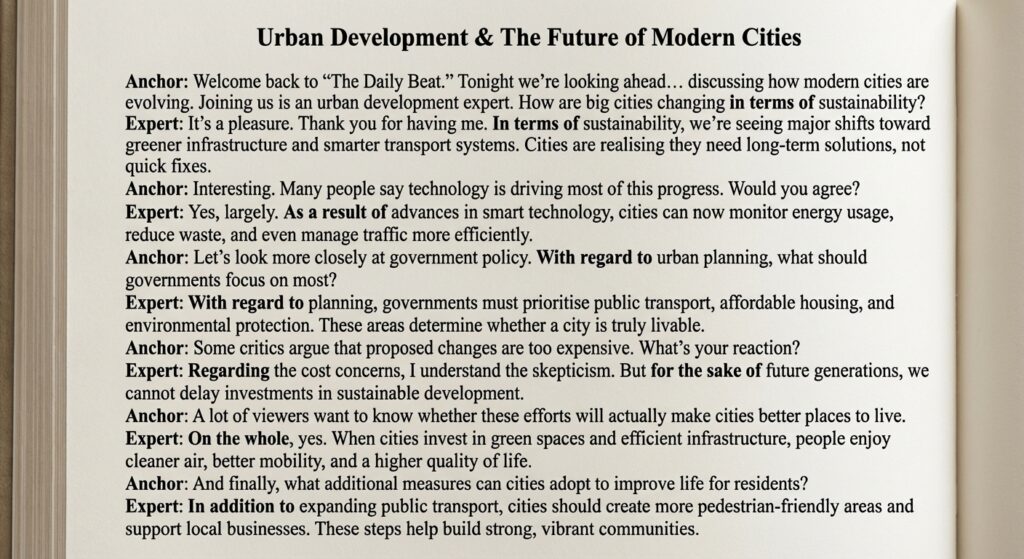
Using sophisticated prepositional phrases to introduce your ideas shows grammatical range. Read the following news dialogue and notice how these prepositional phrases are used.

1) In terms of…/ With regard to / Regarding/ In relation to (Breaking a topic down into categories)
“In terms of job opportunities, big cities are better.”
“Regarding the proposed changes, I am somewhat skeptical.”
2) As a result of…/ Due to/ Because of (Cause and effect, better than just “because”)
“As a result of the internet, information is free.”
“Because of the high costs of living, people are going on holiday less.
3) On the whole…/ Overall/ In general/ Generally (Generalising)
“On the whole, I believe technology is beneficial.”
“Overall, I reckon teaching some financial literacy is useful.”
4) On top of that/ In addition to…/ As well as…/ Apart from../ Aside from… (Adding information)
“In addition to being cheaper, public transport is also greener.”
“As well as that, I think sports can have a positive effects on your social life.”
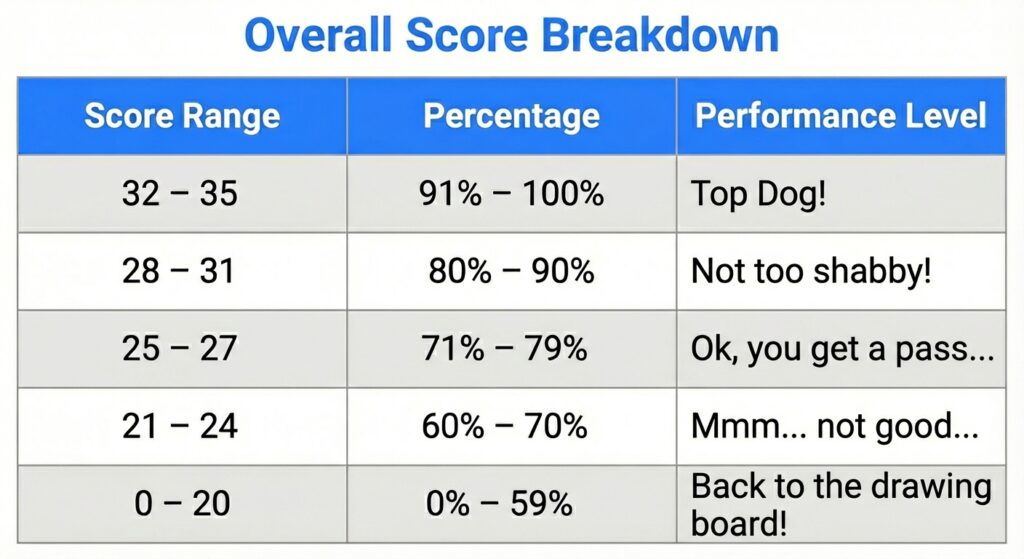
Section 4 Check
Part 1: Multiple Choice (10 Points)
Choose the phrase that best completes the sentence by identifying the correct logical function (cause, addition, generalization, or categorization).
- The concert was cancelled at the last minute ______ the lead singer losing her voice.
a) in terms of
b) due to
c) on the whole - There are a few minor flaws in the design, but ______, it is an excellent product.
a) overall
b) as a result of
c) regarding - ______ being a successful businessman, he is also a talented jazz pianist.
a) In terms of
b) Due to
c) In addition to - We need to make a decision soon ______ the office holiday party.
a) regarding
b) as well as
c) on top of that - The restaurant was disappointing ______ service, although the food was delicious.
a) as a result of
b) in terms of
c) overall - She was late for the meeting, forgot her laptop, and ______, spilled coffee on her shirt.
a) regarding
b) on top of that
c) generally - The company’s profits have increased significantly ______ the new marketing strategy.
a) as a result of
b) apart from
c) in relation to - ______ the rainy weather on Tuesday, our camping trip was perfect.
a) As well as
b) Apart from
c) Due to - ______, Japanese cars are known for being very reliable.
a) Regarding
b) In addition to
c) Generally - The report highlights several issues ______ employee safety standards.
a) in relation to
b) on top of that
c) as a result of
Part 2: Fill in the Blanks (8 Points)
Complete the text below using the phrases from the word bank. Use each phrase only once.
Word Bank:
[ Overall | As a result of | In addition to | Regarding | Due to | In terms of | On top of that | Apart from ]
Here is a quick update on our move to the new city.
(1) _______________, we are very happy with our decision to move here. The city is vibrant and the people are friendly. (2) _______________ job opportunities, the market here is much stronger than in our old town, and I already have two interviews lined up.
However, the actual moving process was quite stressful. The moving truck arrived six hours late (3) _______________ a mechanical failure. (4) _______________, when they finally arrived, it started raining heavily, so lots of our boxes got wet.
(5) _______________ the stressful moving day, everything else has gone smoothly. We found a lovely apartment. (6) _______________ being close to the subway, it also has a great view of the park.
(7) _______________ the children’s new school, we have a meeting with the principal tomorrow to finalize their enrollment. (8) _______________ the warm welcome from our new neighbors, we already feel quite settled.
Part 3: Sentence Transformation (5 Points)
Rewrite the following sentences using the required phrase in parentheses. You may need to change grammar (such as changing verbs to gerunds) to make the sentence correct. Do not change the original meaning.
- Because the cost of living is high, many people are moving out of the city center.
(Due to) - He is a talented writer, and he is also a gifted public speaker.
(As well as) - Let’s talk about the budget. We need to reduce spending by 10%.
(Regarding) - Mostly, I think the meeting went very well.
(On the whole) - The traffic was terrible, and to make matters worse, I forgot my wallet at home.
(on top of that)
Answers
Reveal Answers
Part 1: Multiple Choice (10 Points – 1 pt each)
- b) due to
- a) overall
- c) In addition to
- a) regarding
- b) in terms of
- b) on top of that
- a) as a result of
- b) Apart from
- c) Generally
- a) in relation to
Part 2: Fill in the Blanks (8 Points – 1 pt each)
- Overall
- In terms of
- due to
- On top of that
- Apart from
- In addition to
- Regarding
- As a result of
Part 3: Sentence Transformation (10 Points – 2 pts each)
Scoring suggestion: Give 1 point for choosing the right phrase, and 1 point for correct grammar following it.
1. The traffic was terrible, and on top of that, I forgot my wallet at home.
2. Due to the high cost of living, many people are moving out of the city center.
3. As well as being a talented writer, he is a gifted public speaker. (Must use “being” for full points).
4. Regarding the budget, we need to reduce spending by 10%.
5. On the whole, I think the meeting went very well.